Tag Archives: computer music

Tool and Variations – Computer Music Composition Method

Create a patch, make different sounds with it, and arrange them in order. This is my go-to method for computer music composition. Instead of a theme in the theme and variations form, a computer musician begins a composition by making an electronic instrument or an audio app patch. Then, the composer explores different sonic possibilities of the instrument. The sounds created with the instrument are then presented in a particular order. The article demonstrates this process with my old composition. I will also provide more recent practices of the method with the entries in Computer Music Practice.
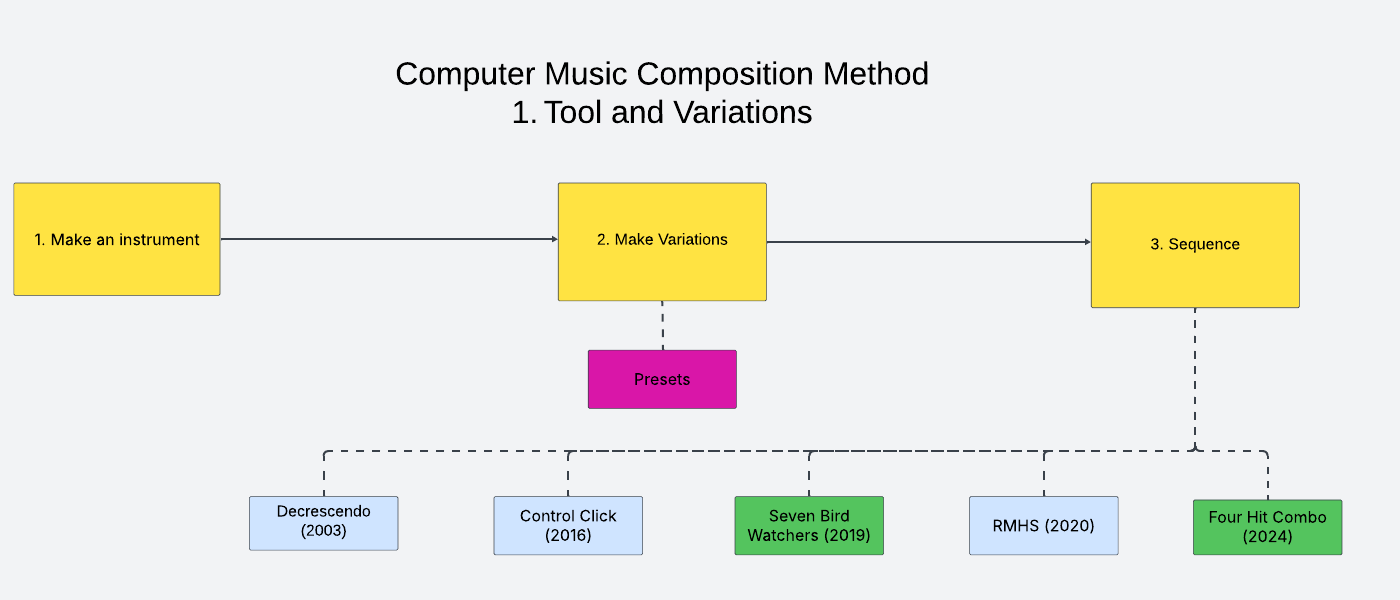
Tool and Variations in Decrescendo (2003)

Step 1. Make a software instrument

A computer music composer’s first job often is to design a digital instrument or a patch. A patch in this context is a specific connection of features/modules in an audio programming environment, such as Max, Csound, or SuperCollider.  In Decrescendo, a fixed-media piece published in 2003, I wrote a Csound patch that generates a series of sine tones according to an adjustable overtone series.  The formula to make a pitch series is as simple as the one below, but I could control tempo, note duration, and pan to my taste.

Note of a scale = fundamental frequency* (overtone number *detune value)

Here are two sound examples generated from the Decrescendo instrument.

Step 2. Make variations with the instrument 

A customized instrument has the potential to generate sounds of various timbres with different, sometimes randomized, settings of its parameters.  The second step in the tools and variations method is to experiment and document as many different parameter settings as possible that yield distinct sounds. In Decrescendo, I adjusted the fundamental frequency, note duration, scale direction, pan position, and detune value to create different, but related, sounds. Some variations are created with duplication and overlap (more on this in another article). Below are some audio examples.

Documented variations of parameter settings in a digital instrument are called presets. Featuring presets of an instrument is a distinct characteristic of electronic music compositions. Here’s an article about presets for further study.  

Step 3. Sequence the variations 

The next step after gathering a library of presets is to make decisions on when to play which sounds. The decision-making and its documentation involve selecting a few from many sounds in Step 2. The deciding factor depends on the context and personal taste. In the case of Decrescendo, the piece opens with an unaltered overtone series, followed by slightly detuned scales. The second section (00:30) contrasts the opening by presenting a few descending overtone series. The third section (00:50)  reminds the listener of the opening gesture with a further exploration of detuning and tempo variation. The preset choices for the rest of the piece are my answers to the question, “What makes sense based on what we have heard so far?”

The sequencing, an act of ordering events, of various sounds made with an instrument, is not formulaic. There is no right answer, but the choices are based on the context, experience, and taste of the creator. 

Computer Music Practice

Tool and variation is a method that could be applied to many digital music formats. Here are my recent applications of the method in installation, fixed media, and electronic ensemble works. The entries are part of the Computer Music Practice project.

Control Click (2016): In this installation for multiple desktops, every computer plays the same SuperCollider patch. The instrument is designed to generate a randomized rhythm and timbre at a pre-scored and fixed timing. In other words, the instrument randomly generates timbre at a fixed sequence of changes. I saved a surprising and best preset setting I found for the climax. 

Seven Bird Watchers (2019): In this electronic ensemble piece, I did not design the instrument, but made a specific drum pattern for Korg Volca Beats. The score displays seven variations of button combinations and gestures that performers need to create with the said drum pattern at a specific timing. The variable tempo is composed/sequenced with SuperCollider.

RMHS (2020):  RMHS is a drone generator made with SuperCollider. A user can download the patch, set parameters, press a button, and create a drone of microtonal harmonies. The RMHS album consists of eight examples of such drones. The sequence portion of this project is the track order, which reflects my interpretation of consonant and dissonant harmonies.

Four Hit Combo (2024): The preset variation and sequence creation process is similar to that of Seven Bird Watchers – I notated different instances of presets for performers to interpret. But the instrument in Four Hit Combo does not have a set sound. Instead, it is a platform that processes any incoming audio files with a set of gestures based on granular synthesis. It is possible to create an instrument without sound in computer music!
Computer Music Practice – Learning

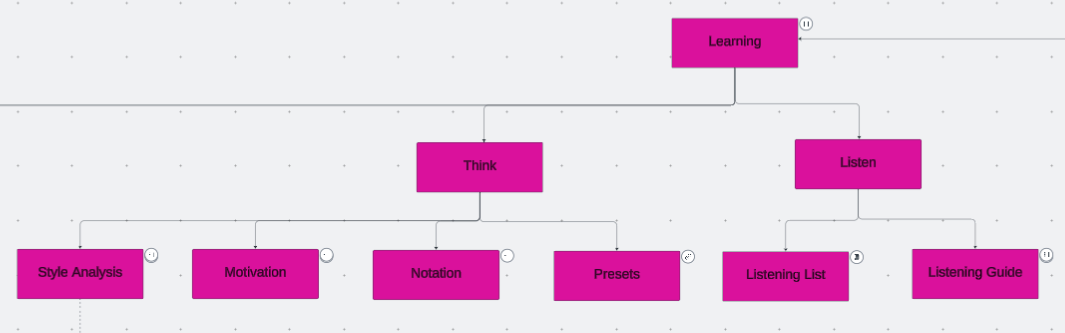
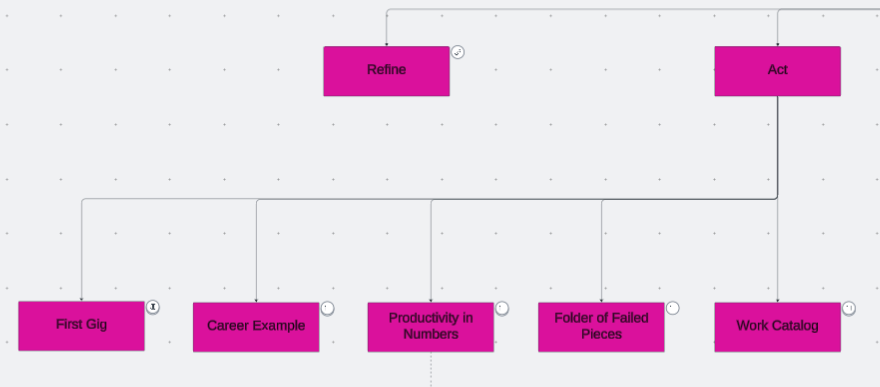
The articles in the Learning section of CMP cover computer musicianship. They are examples of a music technologist’s work and efforts that the audience does not see. But they are essential steps for artistic improvement. Every musician has routines to refine themselves, and the Learning section shares my version of thoughts, actions, and reflections on computer music practice.

There are four subsections, and the first three are listen, think, and act. The first and most fundamental step in musicianship is learning to listen. Then, a conscious and analytical listening connects to thinking. Thinking means analyzing and imagining sounds and techniques to enhance a piece, organizing and comparing past compositions to identify creative patterns, and articulating those thoughts into words for reference. These thoughts become tangible results through actions. The results could be a composition, a concert, a career move, an idea, or another sound to circle back to the listen-think-act process. 

Listening, thinking, and acting are necessary steps in composing, coding, or improvising, as the repetition of those steps refines one’s skills. The refining process in music technology is essential but often overlooked. There are more instruments and techniques I can learn in music technology. I chose a few that interest me the most and spend time and energy to improve at them, rather than using the newest tools. Performers of non-electronic instruments have resources and historical references on the refinement process, such as etudes and method books for orchestral instruments. Computer music does not seem to (or rather, is not designed to) have a standard practice routine, but I can at least share my practice routine specific to computer musicianship. 


Computer Music Practice (CMP) is an interactive and personal example of computer musicianship. Click each entry in the chart to read and listen to Joo Won Park’s computer music research.

Computer Music Practice – Presenting

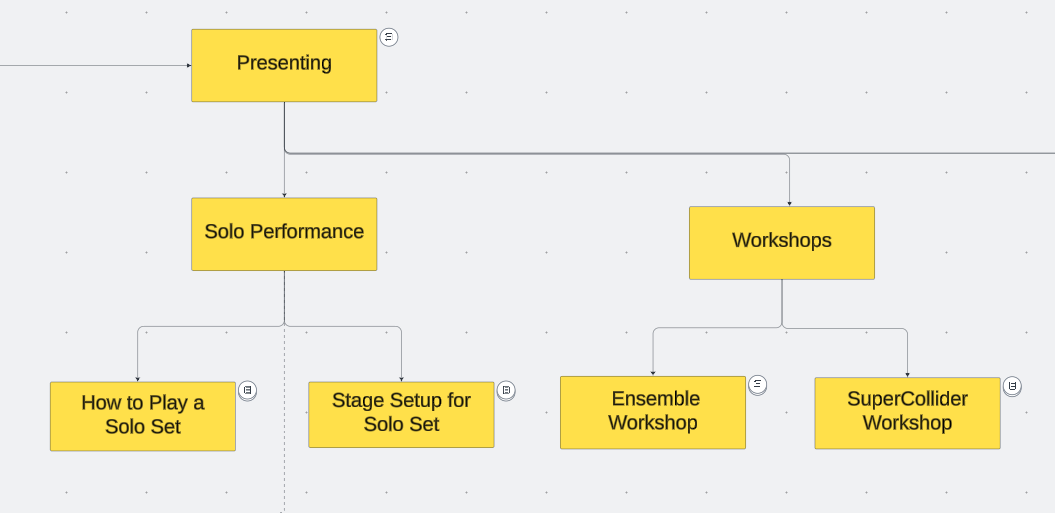
Finishing a composition means the beginning of other work. Posting the audio files on the web is the first step in sharing my music, but it is not the only way to showcase the piece’s best aspects. Music for human performers is meant to be experienced in live concerts. Some generative music’s value is in creating and hearing multiple versions. As an electronic music researcher and teacher, presenting the algorithms, codes, and other relevant findings may be as important as sharing the music.

I do the above to present my work to reach a wider audience. In the Presenting section of Computer Music Practice, I provide more concrete examples of my efforts to do so. Electroacoustic performers interested in promoting their works, as well as curators interested in adding electronic music to their events, may benefit from reading the articles in this section.

  • Solo Performance: Solo performances account for the largest portion of my stage appearances. Performing solo electronic music needs specific preparations. The practice of preparing and presenting electroacoustic solo works changes over time, and I share a record of these changes spanning more than a decade. 
  • Electronic Ensemble: Practice and presentation methods for electronic ensembles vary widely, and there are few records about them. Proper documentation of the creative process helps the evaluation of the genre.  I share my approach to running an electronic ensemble so that those interested can use it as a reference.
  • Tools: Some of my pieces are written as a demo of computer music techniques. Those compositions feature research that could be applied to other people’s works. The articles in this section introduce tools and technologies that can be used and modified. Please credit the creator if sounds and codes made with the tools provided here are applied to a piece.  
  • Workshops: I enjoy providing opportunities to learn about tips and techniques of electronic music production and performance. I share teaching materials for in-person or virtual workshops on electronic ensemble and SuperCollider.

Live electroacoustic music, the genre of music in which I excel, is not well-known. It has relatively little historical context and resources for evaluation, or I am asking people I don’t know to attend a concert where they may not see the relationship between the performer’s actions and the sound. One way to mitigate this inherent challenge is to provide as many opportunities as possible to listen, create, and play electronic music. It requires more effort, such as running workshops and sharing tools. The entries in the Presenting section are my version of such efforts. 


Computer Music Practice (CMP) is an interactive and personal example of computer musicianship. Click each entry in the chart to read and listen to Joo Won Park’s computer music research.

Computer Music Practice – Composing

Composing, an act of making original music, is my main artistic skill. I make concrete and shareable products that represent personal thoughts and experiences. The product is sound, and the material I use is electronics. Since 2002, I have composed and shared over 130 compositions online and offline.  Electronic musicians can have various titles, such as a researcher, educator, developer, performer, etc.  The specialty I’ve focused on is that of a computer-based music composer. 

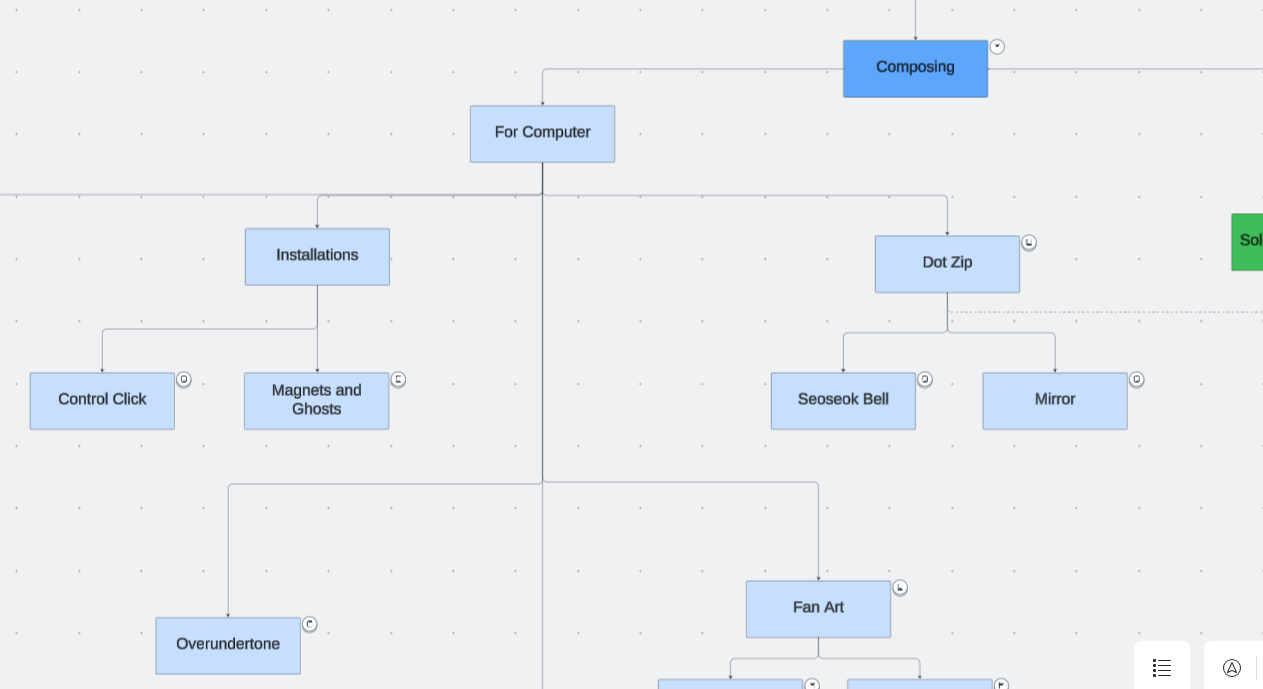
In CMP, I organized my compositions from 2014 to 2026 in two main categories and six subsections. The main categories are defined by the presence or absence of human performers. The first category, For Computers, has fixed media and algorithmically generated music. They do not require human performers to make sound. They are either listened to as is (without images) or are used in multidisciplinary shows. The pieces in this category are further grouped by albums (Overundertone, DotZip, and Forms to Ponder) or functions (Sound Installation or Dance).

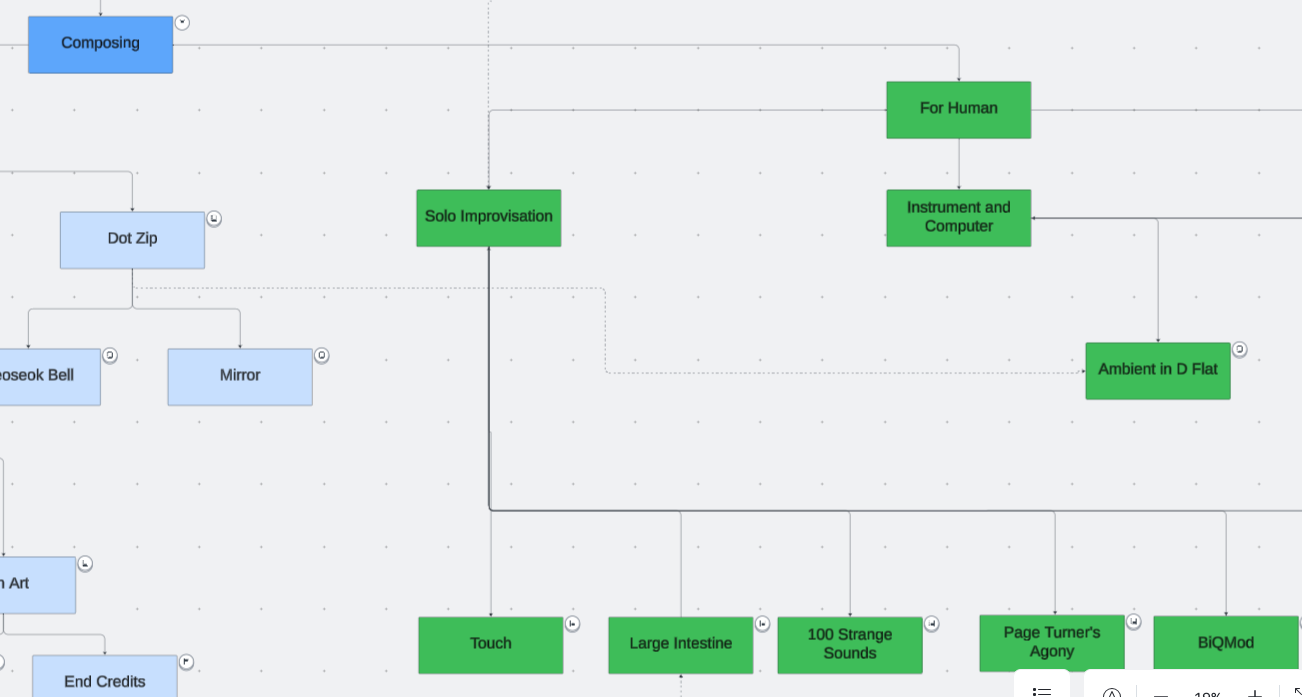
The second category, For Humans, involves pieces for human performers. Unlike the For Computers pieces, they are best experienced in live concerts. The For Humans category is further organized by instrumentation. The Solo Performance section has works written for me to play on stage. Most of them are improvisational and were written to show my performance skills. The music under Instrument and Computer needs performers other than myself. They are written for one or two classically trained instrumentalists and a computer-generated part. The last subcategory, Electronic Ensemble, differs from the others, as they are written for an ensemble of electronic instrument performers. The performers are not necessarily traditionally trained musicians. The number of performers ranges from 4 to 20 or more.

Some compositions were successful in leading me to new or better opportunities. Some pieces did not make it beyond a premiere.  But all compositions led to improvements in technique, time and energy management, human interactions, and getting inspirations.

  • Technique: Writing and editing SuperCollider codes for more than 100 pieces gave me plenty of time to get good at expressing musical ideas in numbers and instructions. The repetition and refinement in composition also form a musical style. I think there is a “Joo Won sound” at this point.
  • Time and Energy Management: With improved technique, I spend a fraction of the time and energy to create music of equal quality compared to decades ago.  The extra time and energy leave room to experiment and explore. 
  • Human Interactions: Working with others is not my natural talent, but it has gotten easier as I write and present more pieces for performers. Meeting, interacting, listening, arguing, and all other activities need practice. Writing and sharing compositions gave me plenty of time for trial and error. 
  • Getting Inspirations: noticing things worth sharing and writing music about them needs practice. Art is about sharing unusual or memorable experiences in life, and artists actively search for them. I learned to notice and observe delightful sounds, experiences, and memories so I can compose. Perhaps more importantly, I also learned to make music when the inspiration is nonexistent. A deadline is the best inspiration. 

Please click on the objects in the CMP diagram to listen and read about the works featuring unique electronic sounds. Most articles also have links to the SuperCollider code for readers to see and run. The purpose of the articles in the Composing section of CMP is to share composing techniques and tips with specific examples from one composer’s work catalog. Compare how I thought, wrote, and executed pieces with other electroacoustic composers. If willing, compare how the pieces in the Composing section are similar or different by album, instrumentation, or functions.


Computer Music Practice (CMP) is an interactive and personal example of computer musicianship. Click each entry in the chart to read and listen to Joo Won Park’s computer music research.

Overundertone (2015)

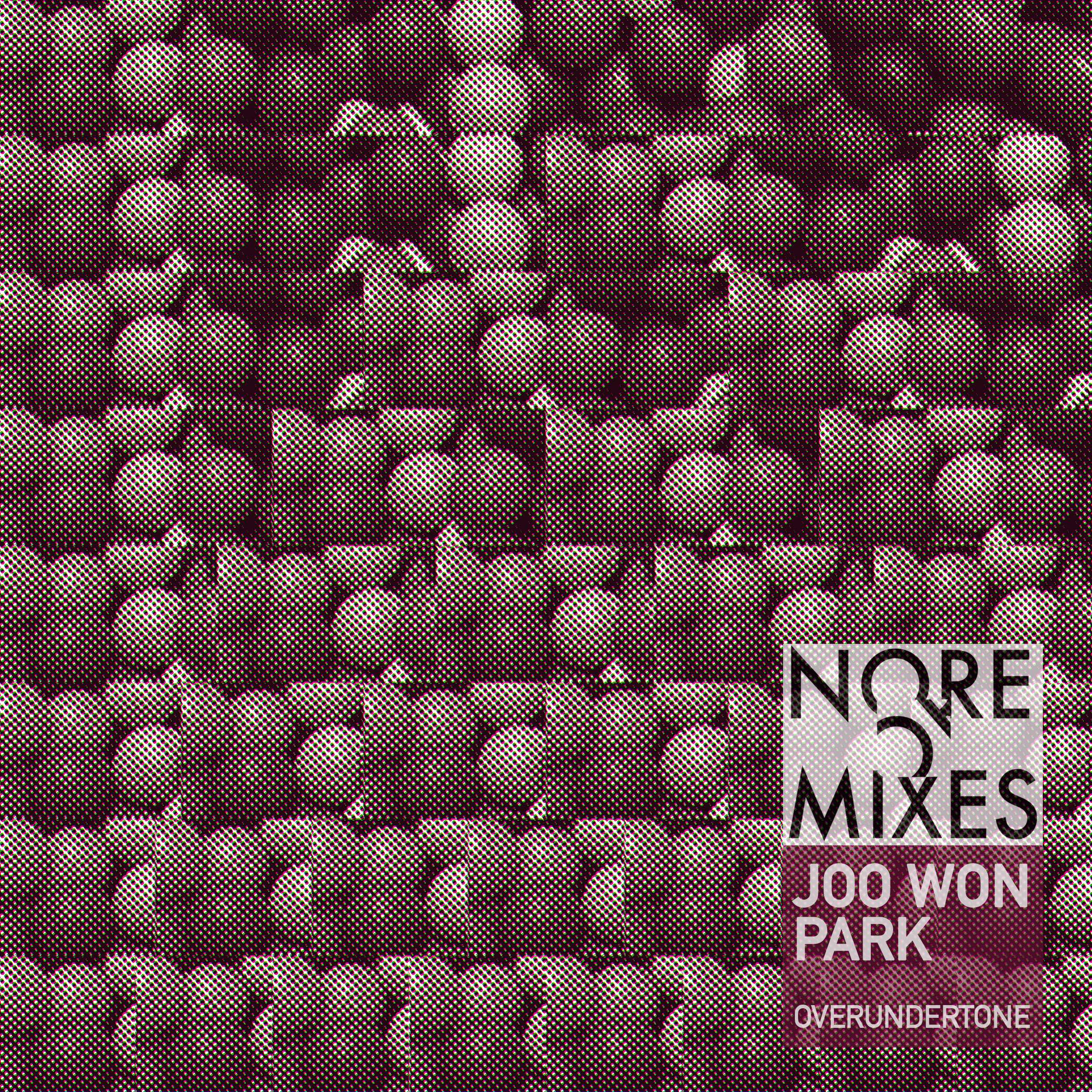
All compositions contain aspects of the creator’s thoughts and life at a particular time.  Overundertone, a 2015 album consisting of eight electroacoustic tracks, is a reflection of me a decade ago.  Listening to the album feels like reading an old diary.  The me in 2015 is unfamiliar to the me in 2025 – he is passionate and curious about the world and people. He had the thoughts and emotions I wish to have now. Below are what I learn about myself when I listened to the tracks.

  • Eyelid Spasm: I liked high frequencies, so I made a piece using them. I played with my (then) 5-year-old and 1-year-old sons, all the time, so the playfulness is in the piece. I even used a picture of me mimicking an animal (I think, I hope) for the kids as a cover photo. I don’t think I can hear many frequencies featured in this piece anymore.
  • Cross Rhythms: I wrote it as a class project example. I asked Oberlin’s TIMARA students to pick a page in Tom Johnson’s Imaginary Music and make an electroacoustic piece about it.  I chose Cross Rhythms and composed a scene where two different rhythms overlap. The teacher-composer identity is in the piece. 
  • Three Corn Punch: It’s a recording of a live performance. It is probably my last piece that does not involve electronic sound. It uses a Disklavier, though.  There are no new techniques here. I learned to accept that I don’t have to develop a new concept for every composition. A good idea from others and myself needs repetition, reinterpretation, and refinement.
  • Cornfields and Cicadas: This is one of the soundscape works using original field recordings and synthesized sounds. I have been creating a series using this instrumentation since my graduate student years. I remember writing it with less struggle and stress, but the quality was about the same. It is a sonic diary of a vacation to a farm in Pennsylvania, where I went with my family and friends. 
  • Beft: I wrote it because I was a dad reading Dr. Seuss to the kids. Beft is a creature in Things You Can Think that only moves to the left. It contains sounds and techniques I loved then – Shepard tone, 8-channel spatialization, overtones, etc. It was also a part of a class project example, like Cross Rhythms. My teacher-composer-dad is all represented in Beft. 
  • Snake and Ox: It is a recording of an improvisation using instruments I used in solo shows. They are a no-input mixer, SuperCollider, and a custom synth. The no-input mixer sound was the most exciting thing to me. I remember dancing along with the no-input mixer noises while practicing. 
  • 10M to Fairmount: It is a sonic diary of a park in Philadelphia, where I lived for six years. Philly feels like a hometown since I started my family there. I must have been interested in visuals in addition to field recordings and synthesizers then. The piece has a video version. Like Cornfields and Cicadas, it is a diary-like piece.  
  • Sky Blue Waves: It’s a piece from 100 Strange Sounds, a project I thought would be my magnum opus. The track has a simple instrumentation (celesta and a field recording of a beach), but has the not-so-happy aspects of my life at that time. As a contrast to Eyelid Spasm, it worked well as a closing piece of the album.

These songs are forgotten, but are still significant to me. Overundertone is an archive of emotions, efforts, and life in audio, the format I love the most. The album reminds me to strive (용써라) like 2015. The jaded, slumped me of 2025 needs that. 

jwp in 2015