Tag Archives: composition

Input And Function – Computer Music Composition Method

In the Tool and Variations post, I explained a composition method for electronic music.

  1. Make an instrument
  2. Make variations using the instrument
  3. Organize the variations in a musical order

This method works only if I make ample variations with distinguishable yet similar traits. The production of such sounds involves structured, methodical repetition. Once I have a surplus of sounds, I use musical experience and training to select and sequence some of them.

I use four ways to produce variations from sound sources. The four are categorized by the quantity of inputs and the number of functions.

  • One input with many functions
  • Many inputs with one function
  • Many inputs with many functions
  • One input with one function

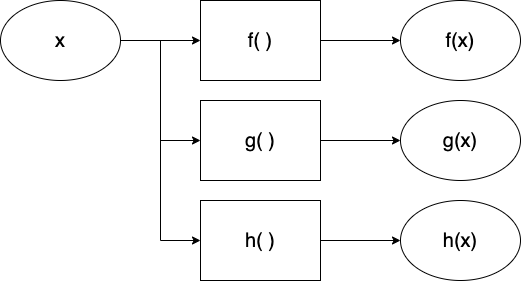
An input in the list above is a sound, an audio file, a sample, or any starting point sound. A function is a tool, a plug-in, a DSP patch, or any technique or idea that changes the input. An input processed by a function produces an output that is different yet similar to the input. The input->function->output relationship is fundamental in music technology. Borrowing terms from mathematics, the relationship is expressed with the symbol f(x), where x is an input, f is a function, and f(x) is an output.

xff(x)
GuitarDistortion pedalDistorted guitar sound
VoiceGranular patchGranularized voice
100+ 200300

The following sections provide a detailed explanation of the different methods for producing variations. Each section has diagrams, example music, and composition tips.

One Input With Many Functions

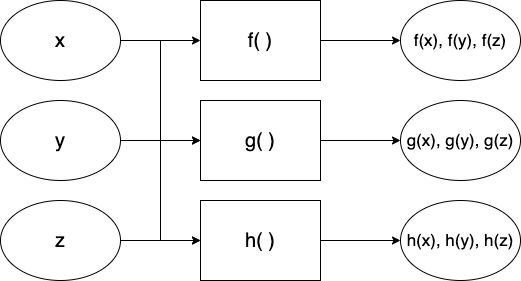
In this method, I limit the type of incoming sounds to one. I compensate for the lack of variety in the source with many plugins, SuperCollider patches, hardware processors, and other electronic transformations. The resulting outputs are different from the original, but listeners can hear that they are related to the source.

The one-input-many-functions model is often observed in interactive electronic music, if we think of an instrument as the input.

  • x: an instrument 
  • f, g, h: effect processors that make a type of variation
  • f(x): resulting sound
  • g(x): resulting sound from another effect processor g
  • h(x): resulting sound from another effect processor h 
  • i(x), j(x), k(x)…

In Armor+2 (2015) for clarinet and computer, a clarinetist plays on stage while the computer performer controls a SuperCollider patch off stage. All computer sounds except for one are a result of processing the clarinet sounds. The audience can hear that the computer parts are clarinet sounds with electronic timbral extensions – In other words, the computer parts sound like a clarinet, but they are not feasible without the help of electronics.

Many Inputs With One Function

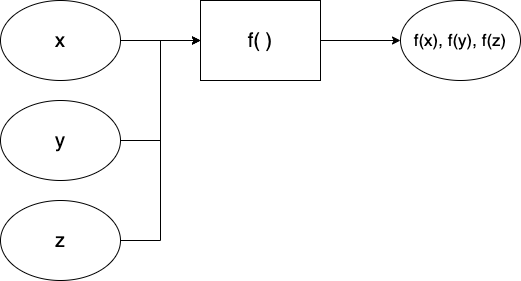
At 0:35-1:00 of  Pierre Schaeffer’s Bilude (1979), recordings of everyday objects alternate with the piano part. They sound musically related to the piano part because the electronics were processed under the same rules – edit the audio in sync with the piano part. We can frame this in the context of the Input and Function.

  • x, y, z: different types of inputs (audio recordings of paper, water, scissors, etc.)
  • f: function (edit according to the rhythm of the piano part)
  • f(x): resulting sound (paper sound in the rhythm of the piano part)
  • f(y): resulting sound (water sound in the rhythm of the piano part)
  • f(z): resulting sound (scissor sound in the rhythm of the piano part)
  • f(a), f(b), f(c)…

Applying a common rule or function adds reasons for seemingly random sounds to coexist in an electronic music composition. A shared function forms a shared identity that audiences can listen to and follow.  

The identity can be a musical rule, like the ones in Bilude’s, or a shared tool.  In Piano Triplets (2020), an EP collaboration with Starkey, all tracks use the same signal processing algorithm.  Starkey provided samples made with piano, Buchla, bouncing ball, and synths. I processed them with the ISJS patch made with SuperCollider.  The results of processing these samples with various presets were distinct enough to make three tracks.

Many inputs With Many Functions

One does not have to choose between one of the two methods mentioned above. In many cases, composers use multiple inputs and multiple functions to generate a vast array of variations.

The maximalist approach could be good if the composer is in control of the available sources. In Bilude, the electronic part at the beginning consists of processed piano sounds, which fall under the One Input With Many Functions category. It is followed by the Many Inputs With One Function section, as explained in the previous section. Then the piece mixes two methods in the more rhythmically freer latter half.

I use many input and function approaches for improvisation. When spontaneity is necessary, it is better to prepare an excess of sounds and tools than to run out of techniques. My electronic improvisation setup cannot play traditional scales or rhythms, so I make it up by bringing in many sound sources and using a SuperCollider patch with 10+ effects. 

One Input With One Function

Is processing one input with one function musically useful, then? Yes, if the input or the function is exceptional, and if finding its value takes time. Many tracks in Fan Art (2023) feature a digital instrument presented within a single compositional idea. The minimalist approach gives the audience time to focus on details and subtle changes. My job as a creator of such music is to design an instrument that is interesting enough and then present its various states efficiently. Below is a list of some tracks in Fan Art in the context of input-function-output.

xff(x)
Karplus string instrumentHarmonic progression of BWV 847847 Twins
Organ-like instrumentHarmonic progression of Claire de LuneEnd Credits
LoopRhythmic modulation of SamulnoriOgum Walk

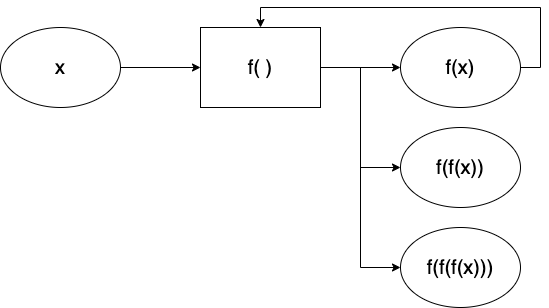
One Input With One Function can also yield unexpected, delightful sounds with feedback.

If a function f processes an input x, and the result f(x) is then processed again by the same function f, the newly iterated output is a new variation. The early and still excellent example is Alvin Lucier’s I Am Sitting In A Room (1969). The piece clearly states its input, function, and output at the beginning, yet the ending result is awestruck. 

* Search for and read computer music composition methods and related articles by visiting my Zotero site: Academic Electronic Musician.

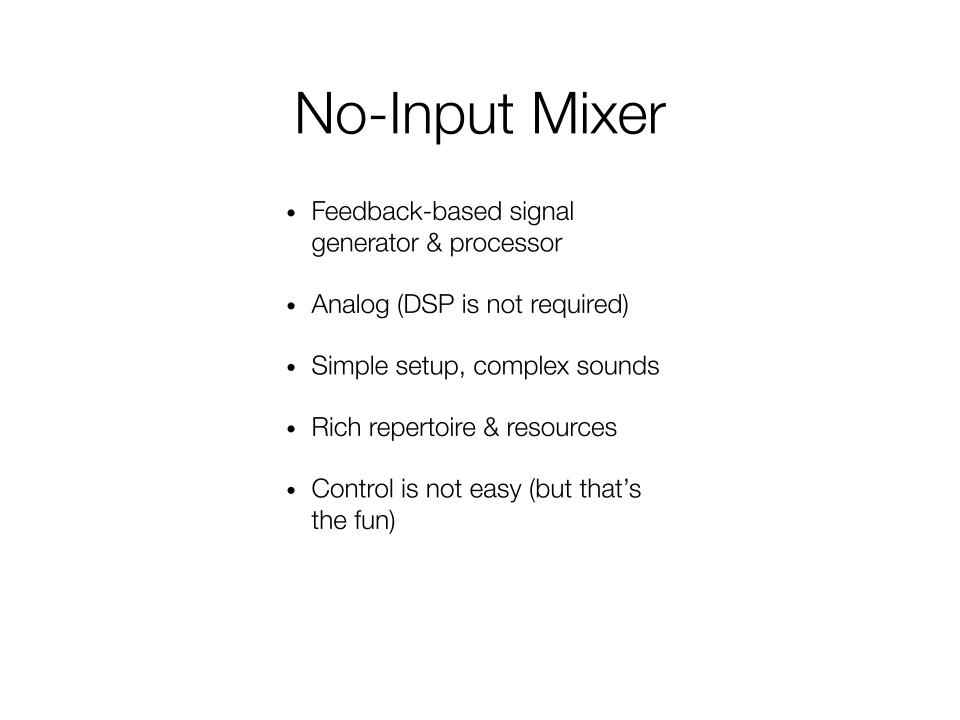
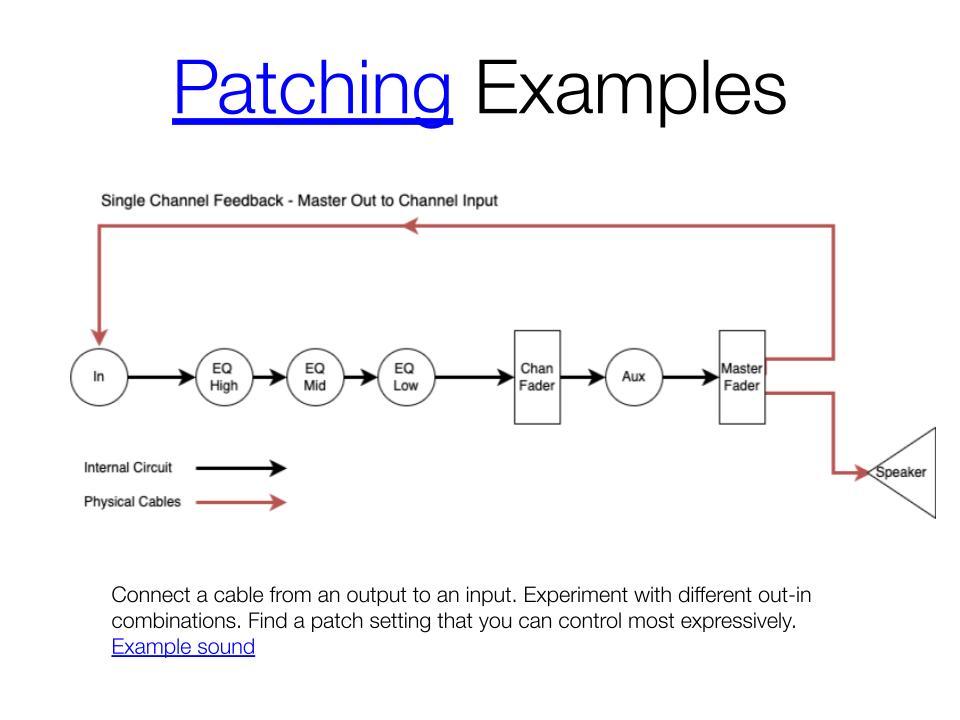
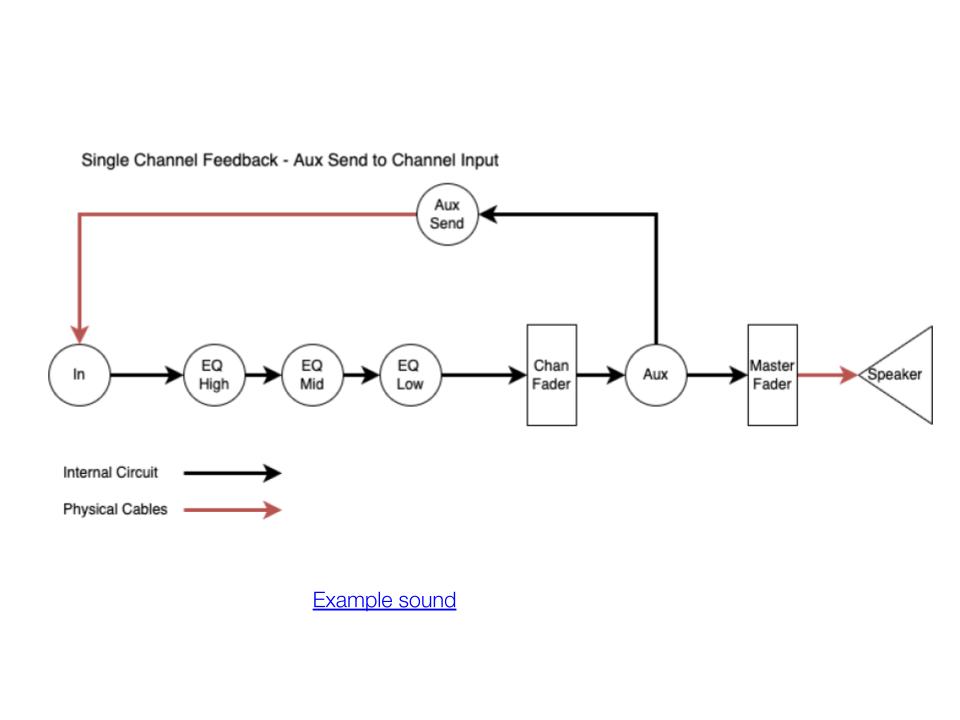
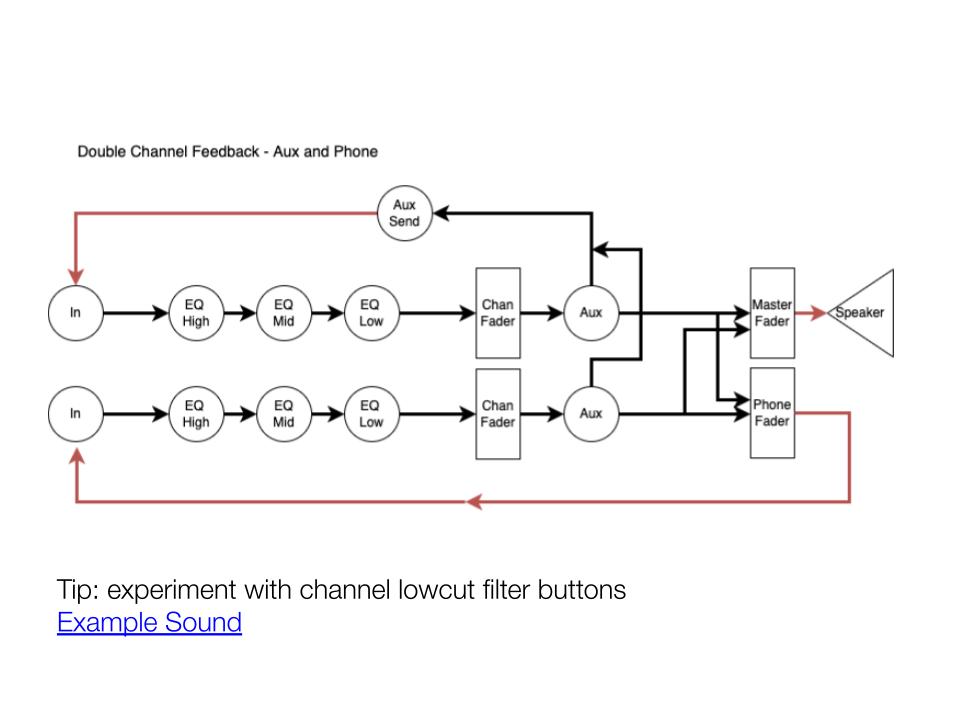
No-Input Mixer: Slides and Audio Examples

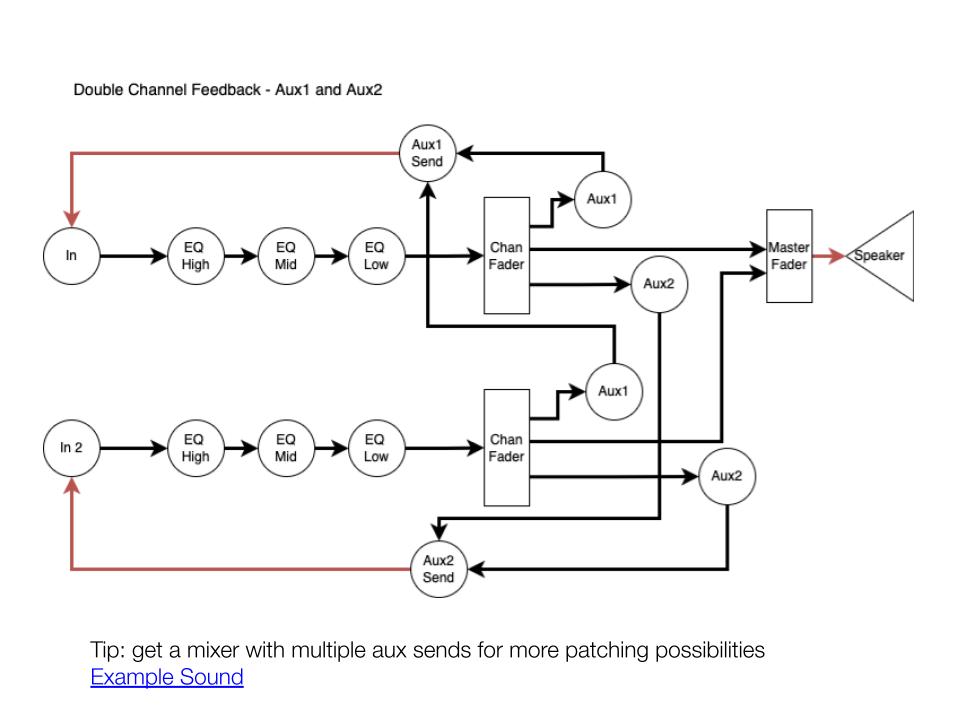
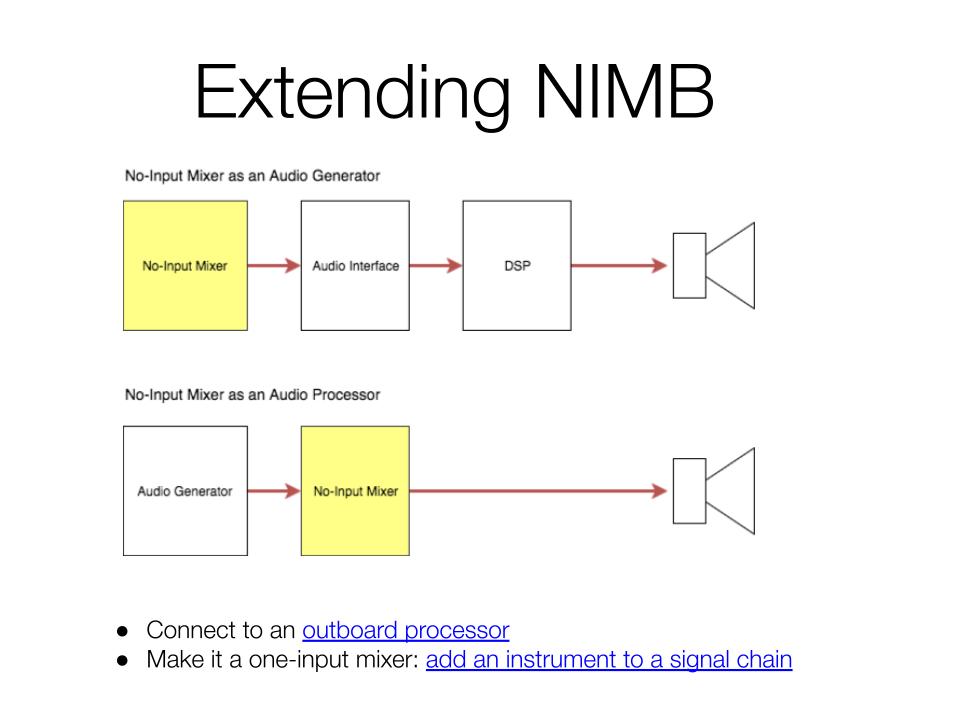
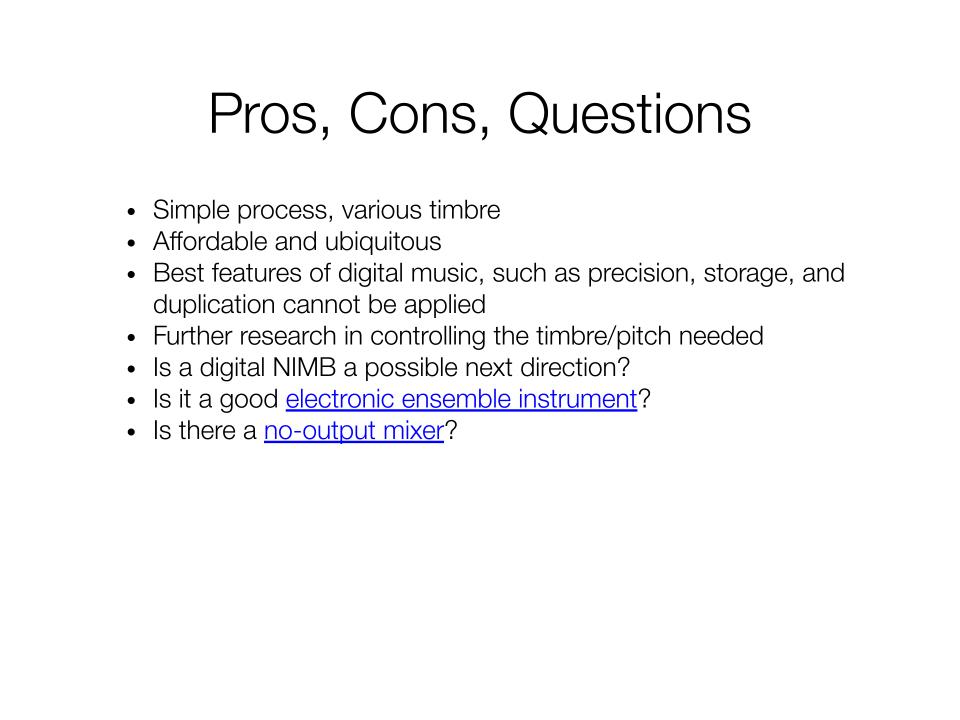
Here are the presentation materials I use for the no-input mixer workshops. A no-input mixer is a great introductory instrument for noise-based electronic music practice.

Google Slides: has links, audio samples, diagrams, etc.

Here’s another version of the tutorial with a bit of performance in the second half

Let me know if you want to invite me to run a workshop. I can bring the necessary gear for the hands-on experience!

Academic Electronic Musician: An Example

Academic Electronic Musician: An Example is a collection of short articles on electronic music composition, performance, and presentation. The collection is useful for the following purposes:

  • Learn what a teaching electronic musician does (besides teaching)
  • Examine audio and scores for electronic music
  • Find examples of electronic music analysis and composition techniques
  • Get insights on electronic music practice in presentation, documentation, and education 

Download and study SuperCollider compositions and tools

The articles and examples in the collection are my research outputs. There is a value in reviewing and connecting works by an individual, different from the value gained from comparing and analyzing works by many. Alvin Lucier’s Music 109: Notes on Experimental Music and Gordon Mumma’s Cybersonic Arts: Adventures in American New Music, for example, gave me insight into an aspiring artist’s electronic music practice spanning decades. I hope this collection of writings serves the same purpose, but from the perspective of a lesser-known yet currently practicing full-time artist. 

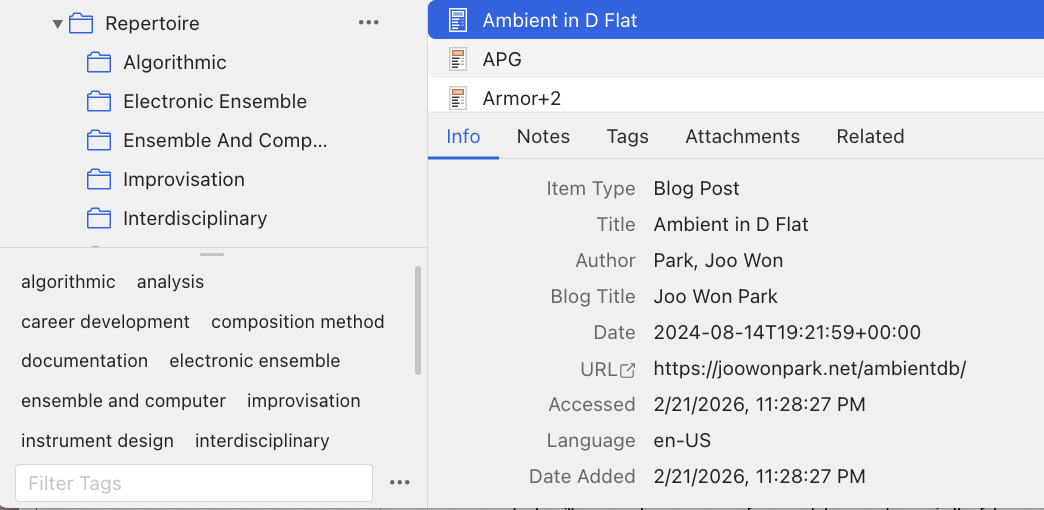
Academic Electronic Musician is hosted in Zotero, a multiplatform tool for organizing research data. The site allowed me to organize blog posts like a search engine tailored to my work. The site, pictured above, is most useful and effective when using tags and related links.  See the linked video for further explanation.


With its interactivity, Academic Electronic Musician may serve as supplementary material for electronic music classes and workshops. For example, if a class is learning about algorithmic composition, teachers can select the algorithmic and analysis tags to find examples with audio, code, and diagrams. Also note that the contents will grow as I compose, perform, and document more in the future. 

But on the site, you may not find typical information in other electronic music textbooks, such as

  • Tags linking to sources created by people other than me
  • Detailed Information about pieces written by other people
  • Instructions on using a specific audio app 

Numerous authors have written about these subjects with examples from well-known works. 

Electronic music researchers and practitioners find new theories and practices that could be useful to others. But those findings must be documented and shared. This, the sharing of knowledge, is what academic musicians do best. I hope the writings in the Academic Electronic Musician serve as an example for those who want to study and experiment with uniquely electronic sound in a musical context. 

Scale – Computer Music Composition Method

Control and presentation of sound in different scales is a distinguishable feature of computer music. In this context, scale does not refer to a group of notes in different pitches, like a C major scale. It instead refers to proportions, as in big vs. small, long vs. short, and few vs. many. Music technology is capable of rendering a single musical idea in extreme proportions, and the collection of those sounds could become a composition.

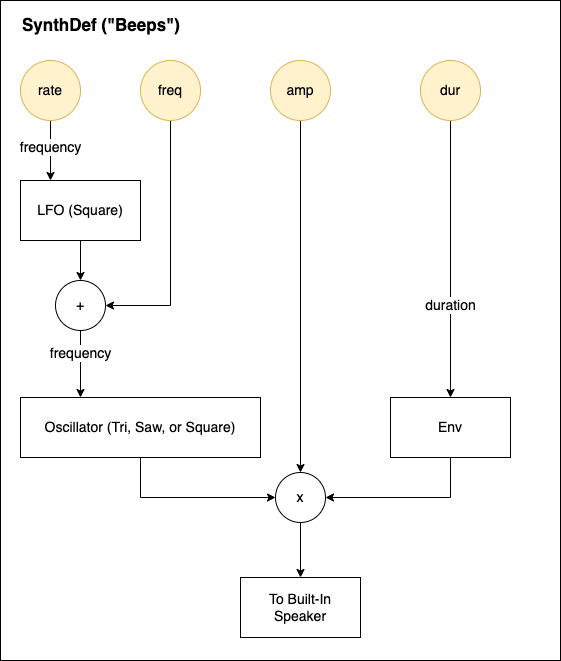
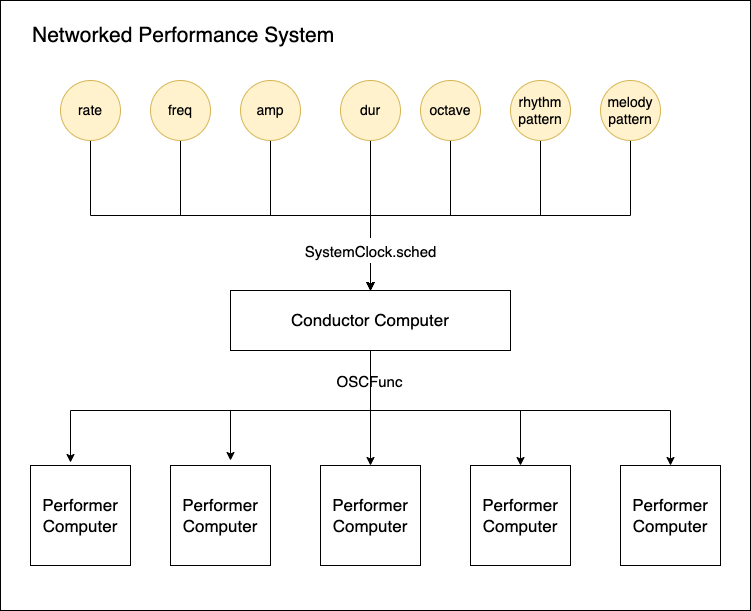
I will demonstrate a scale-based electronic music composition process with Control Click, a sound installation composed in 2016. The piece is an 11-minute site-specific work for eight or more computers, creating an arcade-like environment with electronic blips and blinks. The computers are networked to play the same SuperCollider file, functioning as both a performer and a lighting device. The video below is a version of Control Click presented at the 2016 Third Practice Electroacoustic Music Festival.

Sound Design With Proportions

Featuring various scales/proportions in computer music means applying different values to a control parameter. If one can control the pitch of an electronic instrument, experiment with low Hz and high Hz. If the duration of a note in an electronic instrument could be programmed, make very short and very long sounds. The keyword here is extreme. A computer is capable of following laborious or precise instructions that are difficult or impossible for humans to execute. 

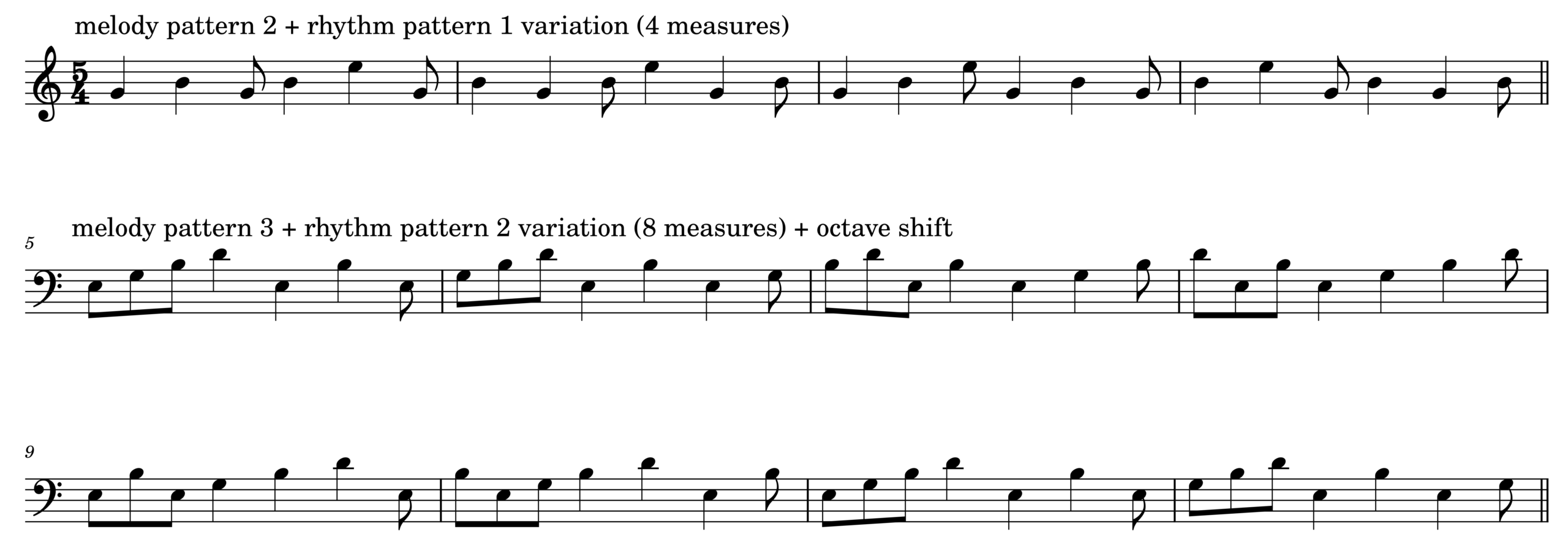
In Control Click, each computer algorithmically generates a melodic line based on a chord. I cannot control the exact sequence of pitches, but I could control the chord type, note duration, and tempo. The range of note duration and their playback pace is wider than that of acoustic instruments, thus capable of creating different timbres and moods. The audio example below plays the melodic line in normal, slightly longer, and very short note durations.

By playing the melodic line heard above with very long note duration and decelerating tempo, I could create the sound below. Note that the tremolo of individual notes reveals more as the note duration becomes longer. Longer and stacked notes with different tremolo rates create a sense of a chord with long reverb.

The sound heard above was inspired by the FFT time-stretching technique, which inspired composers to discover hidden sounds too short to be heard and appreciated in an audio file. The technique can also make a long audio phrase so short that one cannot identify the pitch. In other words, time-stretching scales the duration parameters in extreme proportions. But such an idea is applicable beyond FFT. The audio below is how I applied the duration/tempo scale to the percussion sound.

Composition With Proportions

The idea of applying different proportions can also be applied beyond parameter change. In Control Click, the example sounds in the previous section are meant to be played by multiple computers. But as a site-dependent piece with random number generators, each computer emits a distinguishable note sequence at different physical locations. My goal was to create a sonic environment of an arcade from my childhood – chaotic, overwhelming, and delightful. 

Links below point to the moment in the piece that uses previously mentioned scaling examples in an ensemble format. 

  • The normal melodic line with percussion (1:30)
  • Long note duration (2:30-2:50)
  • Short note duration (5:30-6:00)
  • Extreme extension of note duration and tempo (8:50-10:00)

In the third link, Long note duration, the melodic line is detuned by a random amount at synced timings. The effect of one computer doing so is not so noticeable. But when multiple computers are out of tune in a large space, it creates an impact that I cannot recreate in a concert hall.

Notation of Proportions

The concept of controlling a range and scope of musical parameters, rather than instructing specific notes to play, is transferable to human performance. A proper notation to play an electronic instrument within a limited range can be considered as proportional control of choices. Seven Bird Watchers (2019) for drum machine ensemble is an example.

Seven Bird Watchers uses drum machines with customized sync tracks, and the sync track defines the form—the piece is simply seven sections with an increase in tempi and sonic range.  While the composed sync track holds Korg Volca Beats’ tempo together, the human performers change the drum machine’s parameters according to the score. The score depicts the range of parameters performers can improvise.


For example, the early section has limited parameter changes and choices. It lasts about 35 seconds with a moderate increase and decrease in tempo. The performers, as shown in the score above, have a very limited choice of parameter change – the dark area of the Time/Depth/Pitch/Decay knobs, as well as the dark areas in the instrument choice, are the areas in which the performers can move or use knobs and buttons in Volca Beats.

The latter section, in contrast, has a bigger range of tempo changes with an extended duration of 85 seconds. The performers are free to use the entire range of the knobs with almost all available sounds. The proportion of choices and resulting sounds is more varied. For example, the tempo gets so fast that the sixteenth-note run of some percussion instruments loses sense of rhythm. It starts to sound like a bird chirping.

References

For further study, read Curtis Road’s Microsound. I learned the musical application of scale and proportion from this book. Research the scale and proportion in visual art as well. There are ample examples of how different scales make ordinary events extraordinary. Watching a movie on a big screen feels different than watching it on a phone screen. A slow-motion video effect is fun. Similarly, a sound with varying time scales and contrasting parameter values fascinates me.

Computer Music Composition Method has other related entries. Read them if interested


Tool and Variations – Computer Music Composition Method

Create a patch, make different sounds with it, and arrange them in order. This is my go-to method for computer music composition. Instead of a theme in the theme and variations form, a computer musician begins a composition by making an electronic instrument or an audio app patch. Then, the composer explores different sonic possibilities of the instrument. The sounds created with the instrument are then presented in a particular order. The article demonstrates this process with my old composition. I will also provide more recent practices of the method with the entries in Computer Music Practice.

Tool and Variations in Decrescendo (2003)

Step 1. Make a software instrument

A computer music composer’s first job often is to design a digital instrument or a patch. A patch in this context is a specific connection of features/modules in an audio programming environment, such as Max, Csound, or SuperCollider.  In Decrescendo, a fixed-media piece published in 2003, I wrote a Csound patch that generates a series of sine tones according to an adjustable overtone series.  The formula to make a pitch series is as simple as the one below, but I could control tempo, note duration, and pan to my taste.

Note of a scale = fundamental frequency* (overtone number *detune value)

Here are two sound examples generated from the Decrescendo instrument.

Step 2. Make variations with the instrument 

A customized instrument has the potential to generate sounds of various timbres with different, sometimes randomized, settings of its parameters.  The second step in the tools and variations method is to experiment and document as many different parameter settings as possible that yield distinct sounds. In Decrescendo, I adjusted the fundamental frequency, note duration, scale direction, pan position, and detune value to create different, but related, sounds. Some variations are created with duplication and overlap (more on this in another article). Below are some audio examples.

Documented variations of parameter settings in a digital instrument are called presets. Featuring presets of an instrument is a distinct characteristic of electronic music compositions. Here’s an article about presets for further study.  

Step 3. Sequence the variations 

The next step after gathering a library of presets is to make decisions on when to play which sounds. The decision-making and its documentation involve selecting a few from many sounds in Step 2. The deciding factor depends on the context and personal taste. In the case of Decrescendo, the piece opens with an unaltered overtone series, followed by slightly detuned scales. The second section (00:30) contrasts the opening by presenting a few descending overtone series. The third section (00:50)  reminds the listener of the opening gesture with a further exploration of detuning and tempo variation. The preset choices for the rest of the piece are my answers to the question, “What makes sense based on what we have heard so far?”

The sequencing, an act of ordering events, of various sounds made with an instrument, is not formulaic. There is no right answer, but the choices are based on the context, experience, and taste of the creator. 

Computer Music Practice

Tool and variation is a method that could be applied to many digital music formats. Here are my recent applications of the method in installation, fixed media, and electronic ensemble works. The entries are part of the Computer Music Practice project.

Control Click (2016): In this installation for multiple desktops, every computer plays the same SuperCollider patch. The instrument is designed to generate a randomized rhythm and timbre at a pre-scored and fixed timing. In other words, the instrument randomly generates timbre at a fixed sequence of changes. I saved a surprising and best preset setting I found for the climax. 

Seven Bird Watchers (2019): In this electronic ensemble piece, I did not design the instrument, but made a specific drum pattern for Korg Volca Beats. The score displays seven variations of button combinations and gestures that performers need to create with the said drum pattern at a specific timing. The variable tempo is composed/sequenced with SuperCollider.

RMHS (2020):  RMHS is a drone generator made with SuperCollider. A user can download the patch, set parameters, press a button, and create a drone of microtonal harmonies. The RMHS album consists of eight examples of such drones. The sequence portion of this project is the track order, which reflects my interpretation of consonant and dissonant harmonies.

Four Hit Combo (2024): The preset variation and sequence creation process is similar to that of Seven Bird Watchers – I notated different instances of presets for performers to interpret. But the instrument in Four Hit Combo does not have a set sound. Instead, it is a platform that processes any incoming audio files with a set of gestures based on granular synthesis. It is possible to create an instrument without sound in computer music!