Category Archives: Teaching

No-Input Mixer: Slides and Audio Examples

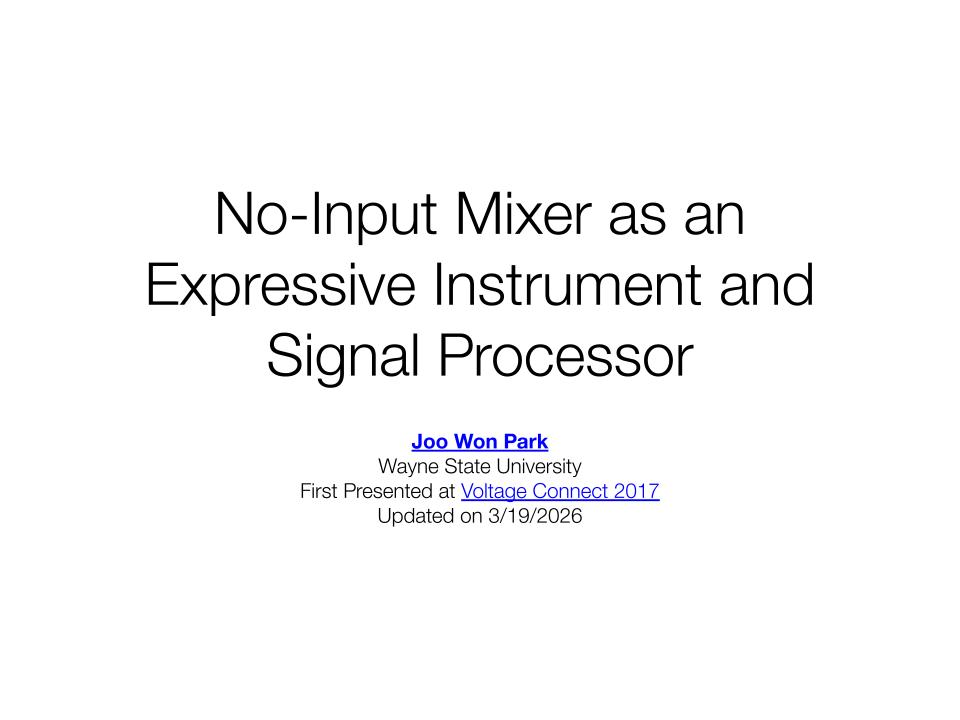
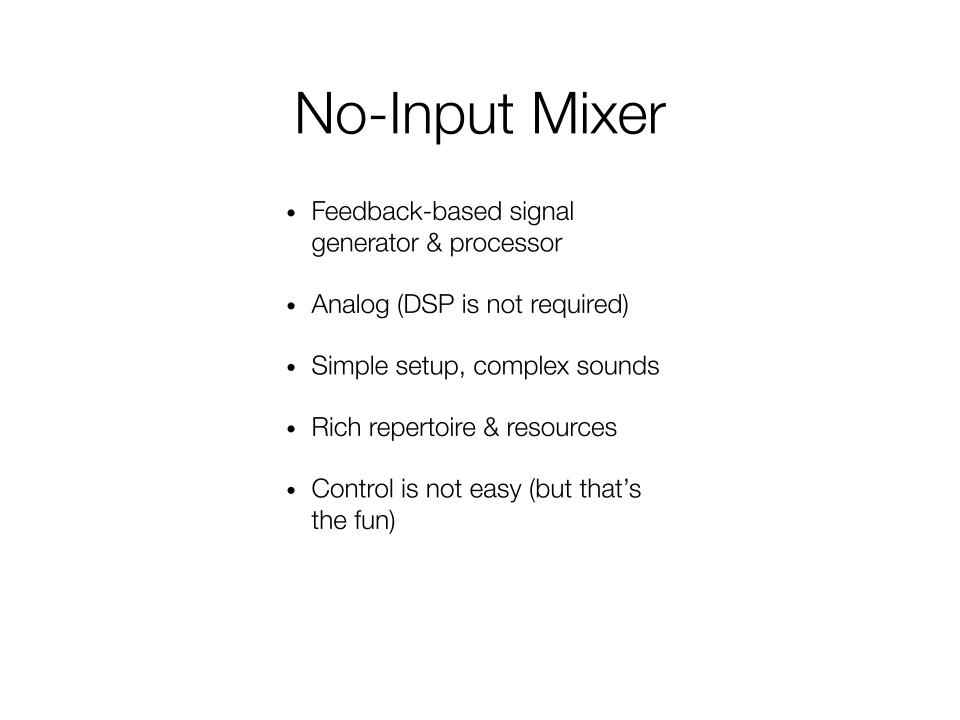
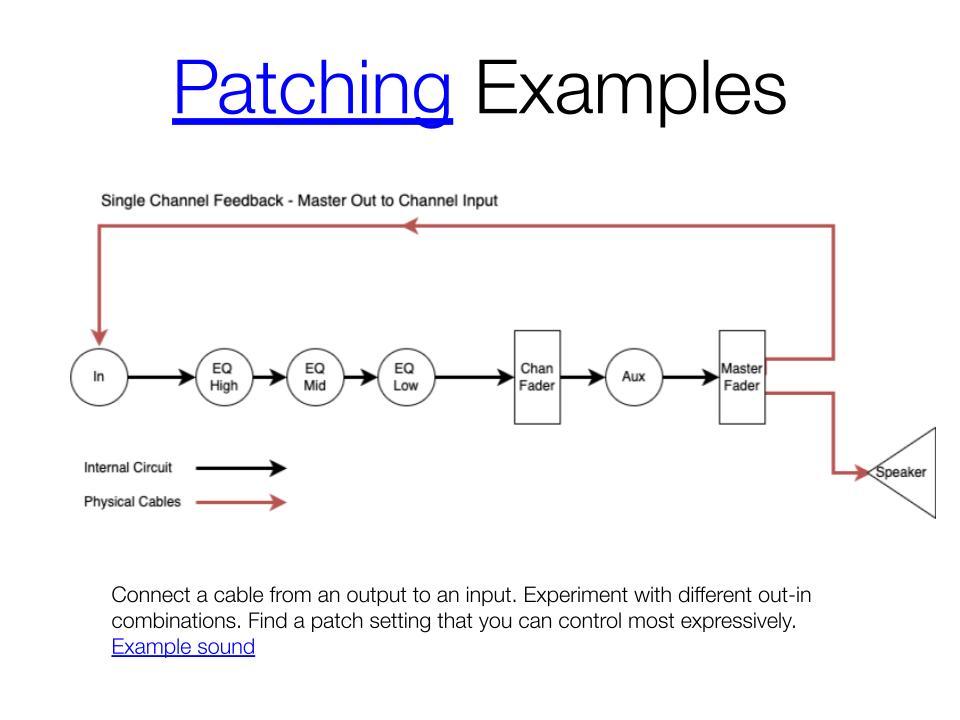
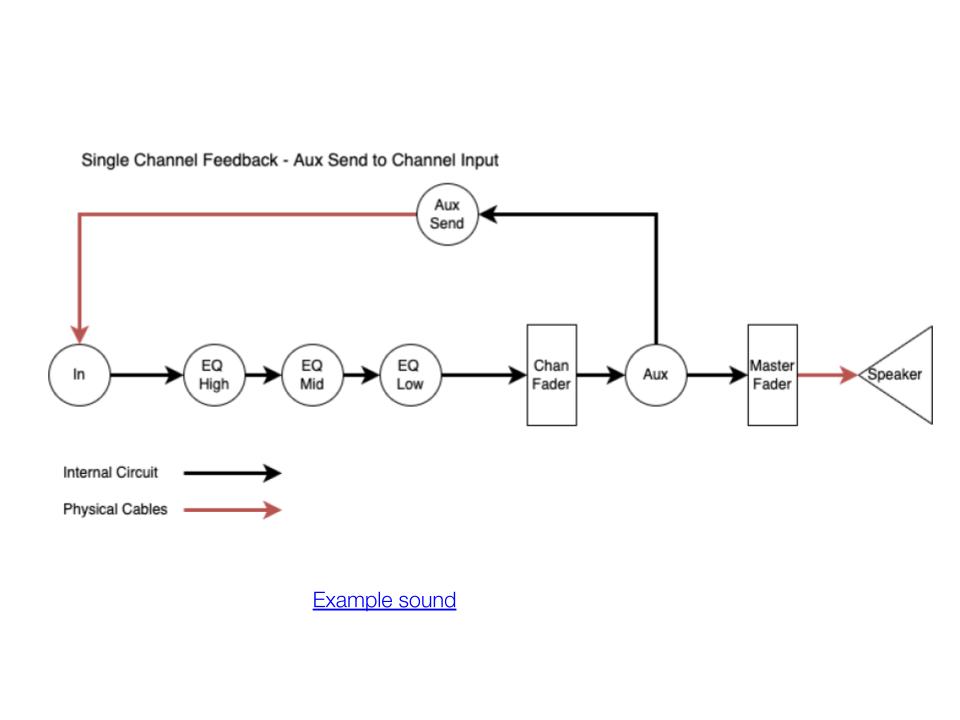
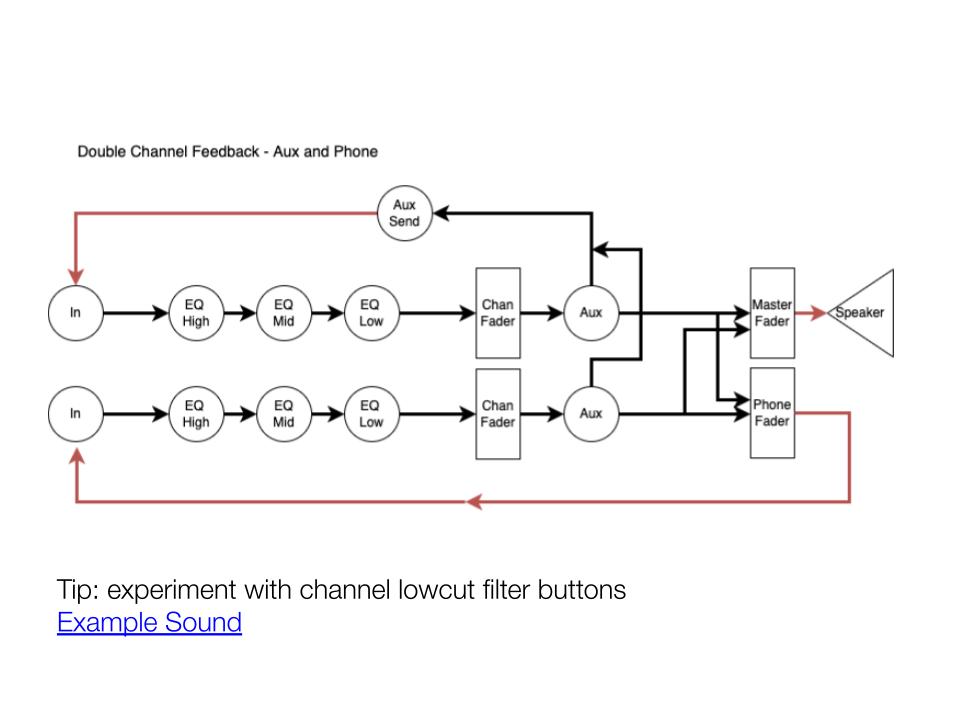
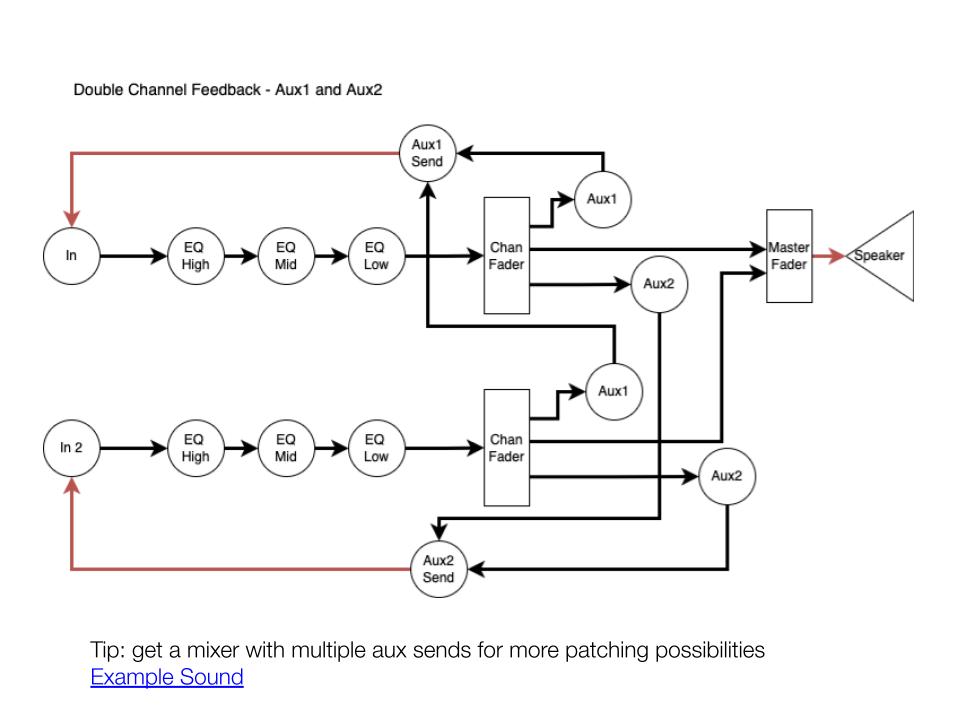
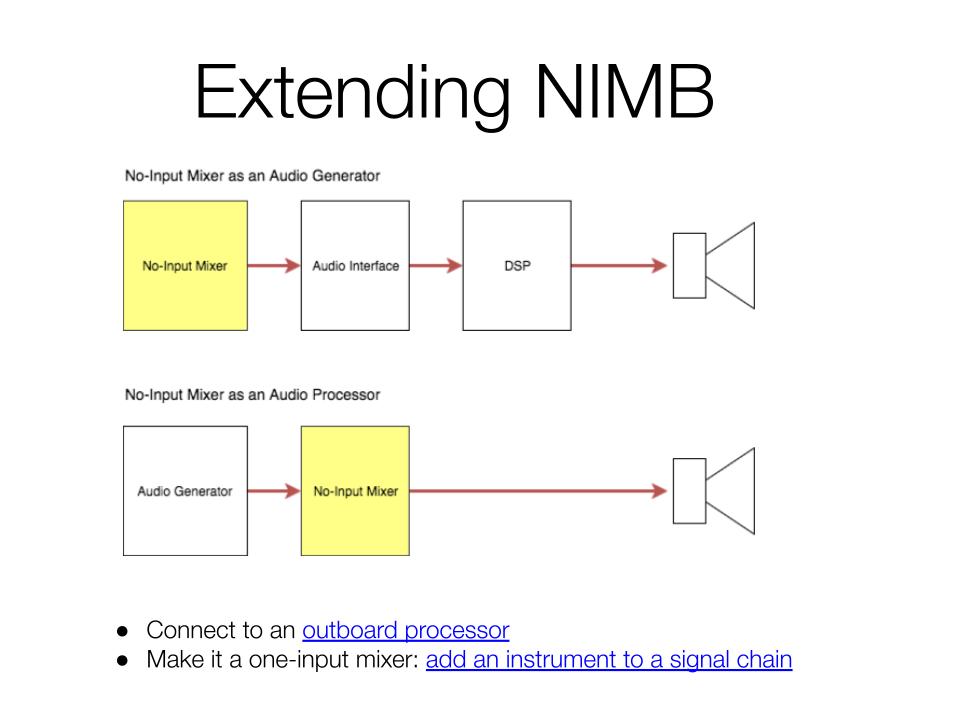
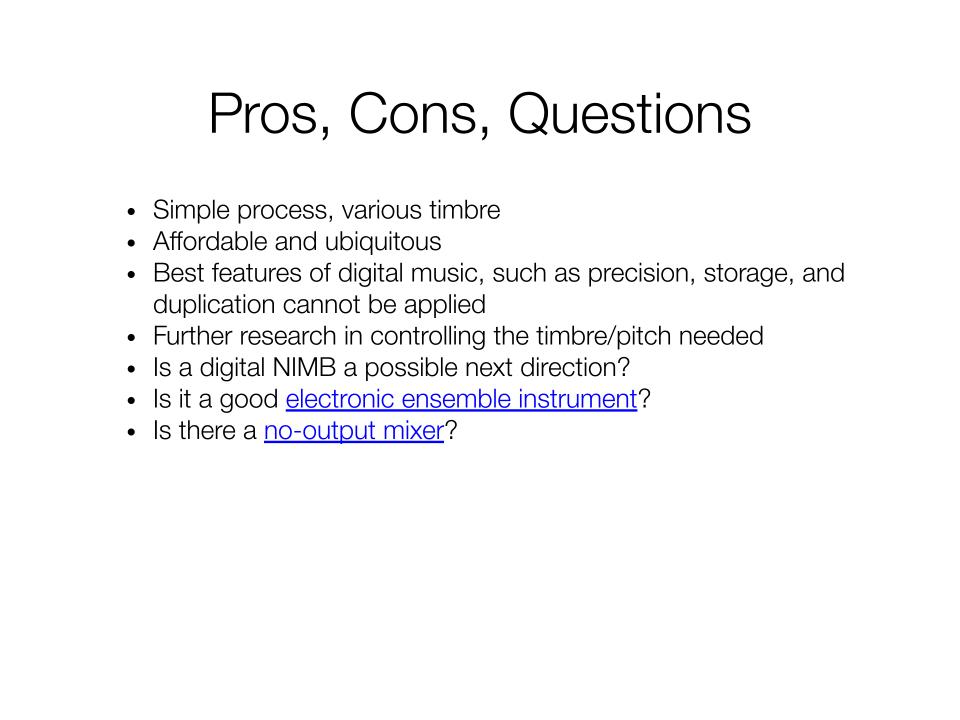
Here are the presentation materials I use for the no-input mixer workshops. A no-input mixer is a great introductory instrument for noise-based electronic music practice.

Google Slides: has links, audio samples, diagrams, etc.

Here’s another version of the tutorial with a bit of performance in the second half

Let me know if you want to invite me to run a workshop. I can bring the necessary gear for the hands-on experience!

Academic Electronic Musician: An Example

Academic Electronic Musician: An Example is a collection of short articles on electronic music composition, performance, and presentation. The collection is useful for the following purposes:

  • Learn what a teaching electronic musician does (besides teaching)
  • Examine audio and scores for electronic music
  • Find examples of electronic music analysis and composition techniques
  • Get insights on electronic music practice in presentation, documentation, and education 

Download and study SuperCollider compositions and tools

The articles and examples in the collection are my research outputs. There is a value in reviewing and connecting works by an individual, different from the value gained from comparing and analyzing works by many. Alvin Lucier’s Music 109: Notes on Experimental Music and Gordon Mumma’s Cybersonic Arts: Adventures in American New Music, for example, gave me insight into an aspiring artist’s electronic music practice spanning decades. I hope this collection of writings serves the same purpose, but from the perspective of a lesser-known yet currently practicing full-time artist. 

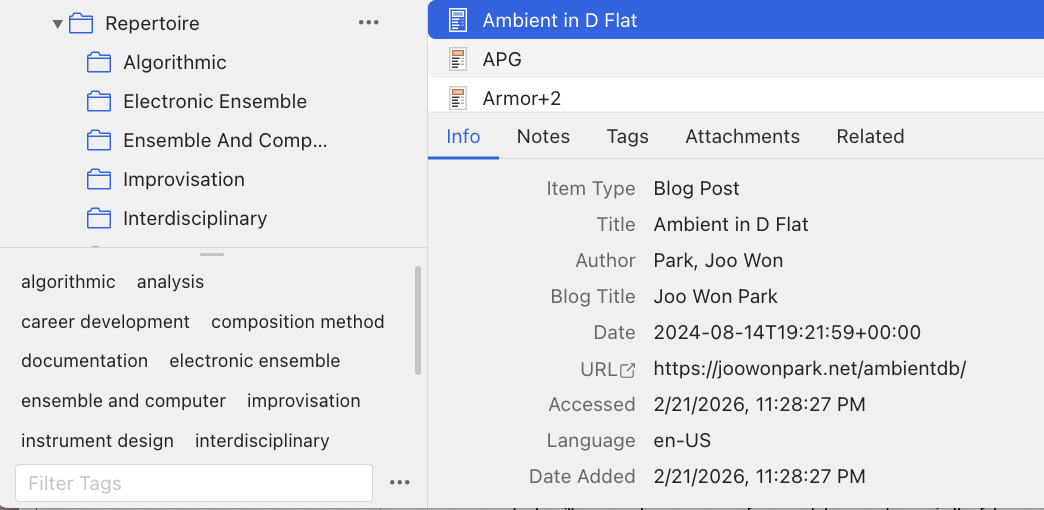
Academic Electronic Musician is hosted in Zotero, a multiplatform tool for organizing research data. The site allowed me to organize blog posts like a search engine tailored to my work. The site, pictured above, is most useful and effective when using tags and related links.  See the linked video for further explanation.


With its interactivity, Academic Electronic Musician may serve as supplementary material for electronic music classes and workshops. For example, if a class is learning about algorithmic composition, teachers can select the algorithmic and analysis tags to find examples with audio, code, and diagrams. Also note that the contents will grow as I compose, perform, and document more in the future. 

But on the site, you may not find typical information in other electronic music textbooks, such as

  • Tags linking to sources created by people other than me
  • Detailed Information about pieces written by other people
  • Instructions on using a specific audio app 

Numerous authors have written about these subjects with examples from well-known works. 

Electronic music researchers and practitioners find new theories and practices that could be useful to others. But those findings must be documented and shared. This, the sharing of knowledge, is what academic musicians do best. I hope the writings in the Academic Electronic Musician serve as an example for those who want to study and experiment with uniquely electronic sound in a musical context. 

Learning Aphasia

Mark Applebaum’s Aphasia (2009) for solo performer is a difficult but rewarding piece. I have been intermittently practicing it since 2021, but I have yet to reach a satisfactory level. Knowing that my run of the piece today is better than in any other day, it gives me joy and energy to keep practicing. I wanted to share that delight in the last month’s Wayne State Faculty Recital Series. Despite many mistakes, the performance was received well by students and guests. Aphasia attracts and affects audiences and performers like no other electronic pieces I know. I can think of two, perhaps very personal, reasons.

Soulslike 

Aphasia is an Elden Ring-equivalent of electroacoustic music. The unforgiving difficulty is part of the fun. In practicing Aphasia, I had innumerable  “YOU DIED” moments. Learning small sections required focus and discipline, and still, the chance of succeeding was slim. But like a soulslike game, the process of achieving goals was fun. I understood more about the piece’s structural relationships, sound design techniques, and choreographic thoughts through repeated readings, listening, and failing. 

When I memorized the piece, I felt joy, similar to the moment I beat the final boss in Elden Ring after hundreds of hours of playtime. I learned to work consistently to achieve seemingly impossible goals. Musicians, of course, acquire this trait, but I needed a reminder and reinforcement.  Practicing Aphasia during the COVID quarantine semesters did that job. 

The audience watching Aphasia immediately gets its pleasant-but-difficult aspect. It’s fun but serious. It’s confusing, but there’s the order. And it’s inviting – instead of “I can’t do what I see on stage,” the audience may feel “I want to try it one day.” Aphasia seems to be an excellent introduction to studying the performance aspect of electronic music. Once a person has experience of doing Aphasia, watching the performance has a new meaning. It’s like watching a PVP match when knowing the mechanics and insights of a video game.   

Notation

Aphasia is a fully-notated piece composed in 2009. Hundreds of performers, mainly percussionists, played it in the 2010s. In contrast to many graphic notations,  the score is not to be freely interpreted. There is a clear notion of a mistake when the performer misses the timing or makes a wrong hand gesture. This aesthetics contrasts with my solo performance practice in the 2010’s, in which I freely improvised on stage with found objects, MIDI controllers, and found objects. The improvisatory nature of my performance made the audience expect the unexpected at the expense of irreplicability – I was the only person who could perform my solo electroacoustic works. In the composer of Aphasia’s words, I was the best and the worst performer of my piece.  

While only the improviser could perform their pieces, hundreds of percussionists performed Aphasia as the composer intended. Aphasia’s technology barrier is low, and the piece is a hit in every concert. When done correctly, the piece is indistinguishable from many high-tech compositions using motion sensors or controllers. Performers can make such an experience by studying notation, like many other pieces that they have studied previously. 

Aphasia taught me the effectiveness of low technology and low dependence on improvisational skill. With well-written notation, such a composition travels far, invites more performers, and lasts long. Many mixed pieces (i.e., those with an instrument and prerecorded electronics) have the same strength, but Aphasia stands out by featuring the most accessible instrument. My recent electronic ensemble pieces reflect this approach. They are built to be transferable, non-virtuostic,  and have low technological/financial barriers. 

Summary

Aphasia reinforces the music fundamentals I often forget – practicing and overcoming challenges is an essential part of musicianship, and great notation makes performers change and improve. I forgot these, perhaps as a byproduct of pursuing the new and the cutting-edge as a profession. 

Learning Aphasia also rekindled my role as a student. To create and teach, I need to study and practice. Consistently and continuously. The result of doing so does not have to be perfect, but sharing and explaining what I experienced is what teacher-artists do. Knowing me, I will probably forget the lessons. When that happens, I will relearn Aphasia (and/or play Elden Ring) to remember it again.

Computer Music Practice – Learning

The articles in the Learning section of CMP cover computer musicianship. They are examples of a music technologist’s work and efforts that the audience does not see. But they are essential steps for artistic improvement. Every musician has routines to refine themselves, and the Learning section shares my version of thoughts, actions, and reflections on computer music practice.

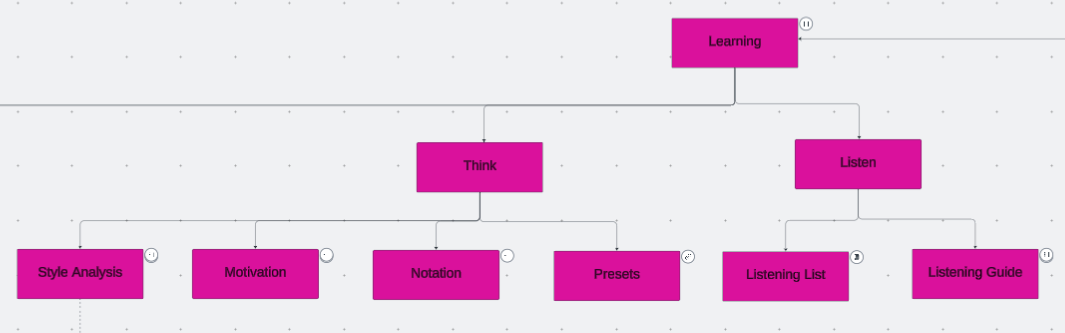
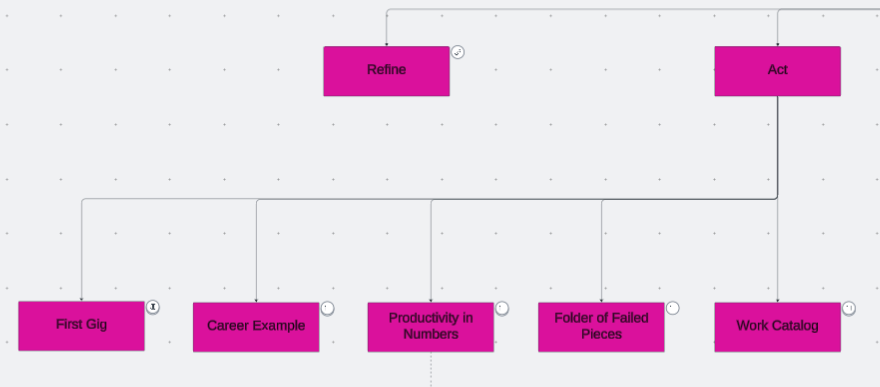
There are four subsections, and the first three are listen, think, and act. The first and most fundamental step in musicianship is learning to listen. Then, a conscious and analytical listening connects to thinking. Thinking means analyzing and imagining sounds and techniques to enhance a piece, organizing and comparing past compositions to identify creative patterns, and articulating those thoughts into words for reference. These thoughts become tangible results through actions. The results could be a composition, a concert, a career move, an idea, or another sound to circle back to the listen-think-act process. 

Listening, thinking, and acting are necessary steps in composing, coding, or improvising, as the repetition of those steps refines one’s skills. The refining process in music technology is essential but often overlooked. There are more instruments and techniques I can learn in music technology. I chose a few that interest me the most and spend time and energy to improve at them, rather than using the newest tools. Performers of non-electronic instruments have resources and historical references on the refinement process, such as etudes and method books for orchestral instruments. Computer music does not seem to (or rather, is not designed to) have a standard practice routine, but I can at least share my practice routine specific to computer musicianship. 


Computer Music Practice (CMP) is an interactive and personal example of computer musicianship. Click each entry in the chart to read and listen to Joo Won Park’s computer music research.

Computer Music Practice – Composing

Composing, an act of making original music, is my main artistic skill. I make concrete and shareable products that represent personal thoughts and experiences. The product is sound, and the material I use is electronics. Since 2002, I have composed and shared over 130 compositions online and offline.  Electronic musicians can have various titles, such as a researcher, educator, developer, performer, etc.  The specialty I’ve focused on is that of a computer-based music composer. 

In CMP, I organized my compositions from 2014 to 2026 in two main categories and six subsections. The main categories are defined by the presence or absence of human performers. The first category, For Computers, has fixed media and algorithmically generated music. They do not require human performers to make sound. They are either listened to as is (without images) or are used in multidisciplinary shows. The pieces in this category are further grouped by albums (Overundertone, DotZip, and Forms to Ponder) or functions (Sound Installation or Dance).

The second category, For Humans, involves pieces for human performers. Unlike the For Computers pieces, they are best experienced in live concerts. The For Humans category is further organized by instrumentation. The Solo Performance section has works written for me to play on stage. Most of them are improvisational and were written to show my performance skills. The music under Instrument and Computer needs performers other than myself. They are written for one or two classically trained instrumentalists and a computer-generated part. The last subcategory, Electronic Ensemble, differs from the others, as they are written for an ensemble of electronic instrument performers. The performers are not necessarily traditionally trained musicians. The number of performers ranges from 4 to 20 or more.

Some compositions were successful in leading me to new or better opportunities. Some pieces did not make it beyond a premiere.  But all compositions led to improvements in technique, time and energy management, human interactions, and getting inspirations.

  • Technique: Writing and editing SuperCollider codes for more than 100 pieces gave me plenty of time to get good at expressing musical ideas in numbers and instructions. The repetition and refinement in composition also form a musical style. I think there is a “Joo Won sound” at this point.
  • Time and Energy Management: With improved technique, I spend a fraction of the time and energy to create music of equal quality compared to decades ago.  The extra time and energy leave room to experiment and explore. 
  • Human Interactions: Working with others is not my natural talent, but it has gotten easier as I write and present more pieces for performers. Meeting, interacting, listening, arguing, and all other activities need practice. Writing and sharing compositions gave me plenty of time for trial and error. 
  • Getting Inspirations: noticing things worth sharing and writing music about them needs practice. Art is about sharing unusual or memorable experiences in life, and artists actively search for them. I learned to notice and observe delightful sounds, experiences, and memories so I can compose. Perhaps more importantly, I also learned to make music when the inspiration is nonexistent. A deadline is the best inspiration. 

Please click on the objects in the CMP diagram to listen and read about the works featuring unique electronic sounds. Most articles also have links to the SuperCollider code for readers to see and run. The purpose of the articles in the Composing section of CMP is to share composing techniques and tips with specific examples from one composer’s work catalog. Compare how I thought, wrote, and executed pieces with other electroacoustic composers. If willing, compare how the pieces in the Composing section are similar or different by album, instrumentation, or functions.


Computer Music Practice (CMP) is an interactive and personal example of computer musicianship. Click each entry in the chart to read and listen to Joo Won Park’s computer music research.