
Academic Electronic Musician: An Example is a collection of short articles on electronic music composition, performance, and presentation. The collection is useful for the following purposes:
- Learn what a teaching electronic musician does (besides teaching)
- Examine audio and scores for electronic music
- Find examples of electronic music analysis and composition techniques
- Get insights on electronic music practice in presentation, documentation, and education
Download and study SuperCollider compositions and tools
The articles and examples in the collection are my research outputs. There is a value in reviewing and connecting works by an individual, different from the value gained from comparing and analyzing works by many. Alvin Lucier’s Music 109: Notes on Experimental Music and Gordon Mumma’s Cybersonic Arts: Adventures in American New Music, for example, gave me insight into an aspiring artist’s electronic music practice spanning decades. I hope this collection of writings serves the same purpose, but from the perspective of a lesser-known yet currently practicing full-time artist.
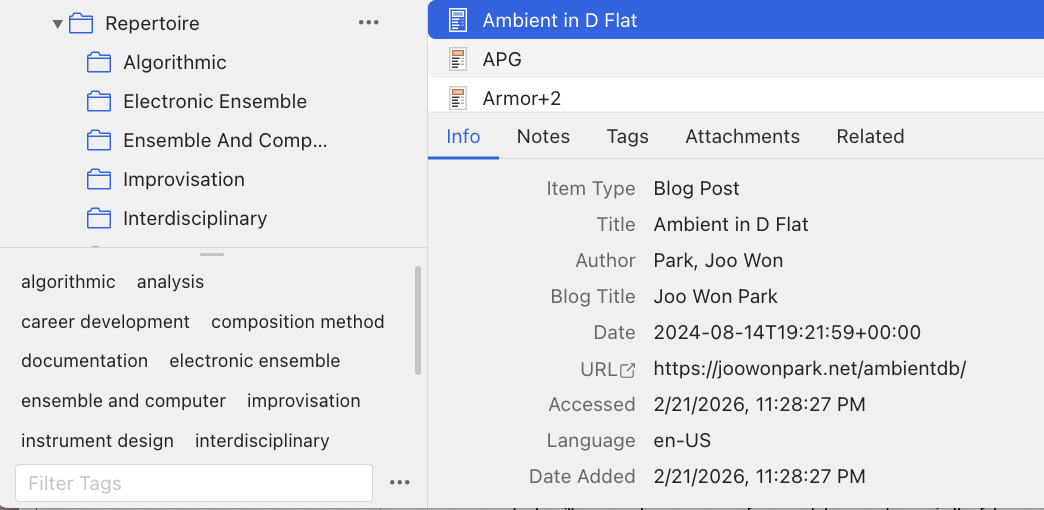
Academic Electronic Musician is hosted in Zotero, a multiplatform tool for organizing research data. The site allowed me to organize blog posts like a search engine tailored to my work. The site, pictured above, is most useful and effective when using tags and related links. See the linked video for further explanation.
With its interactivity, Academic Electronic Musician may serve as supplementary material for electronic music classes and workshops. For example, if a class is learning about algorithmic composition, teachers can select the algorithmic and analysis tags to find examples with audio, code, and diagrams. Also note that the contents will grow as I compose, perform, and document more in the future.
But on the site, you may not find typical information in other electronic music textbooks, such as
- Tags linking to sources created by people other than me
- Detailed Information about pieces written by other people
- Instructions on using a specific audio app
Numerous authors have written about these subjects with examples from well-known works.
Electronic music researchers and practitioners find new theories and practices that could be useful to others. But those findings must be documented and shared. This, the sharing of knowledge, is what academic musicians do best. I hope the writings in the Academic Electronic Musician serve as an example for those who want to study and experiment with uniquely electronic sound in a musical context.