For W is a short piece for toy piano and electronics. I hear that the harmonies played in a toy piano have particular ring and color. Even perfect 5th intervals have somewhat dissonant but delightful quality. This particular trait of the instrument is sonically expanded with the electronic part.
For W is an update/rearrangement of 100 Strange Sounds No. 69. The score and the electronic part can be downloaded at the following Dropbox link.
Use SuperCollider in either PC or Mac. Run ForW.scd in SuperCollider. Instruction is noted on the score. Using SuperCollider is the most preferred method for its sound quality
Use the app for Mac OS X. Download and uncompress ForW-OSX.zip. Run it on a Mac computer.
Use an Android phone or tablet. Download and install ForW.apk. There may be some unwanted lag, but this could be the easiest to set up.
Performed by EMEWS (Electronic Music Ensemble of Wayne State) on 10/11/2018
The purpose of this piece is to exercise with flexible control of the tempo and note duration in electronic instruments. By subtly changing the rate of repetition (i.e., frequency) the ensemble can phase in and out of a perceivable rhythmic pattern. This piece is also an opportunity for the students to read and interpret a graphical score as well as thinking musical ideas in numbers.
* Beat Matching is the first piece of Etudes for Electronic Ensemble. The etudes consist of easy-to-rehearse electronic ensemble pieces for beginner electronic musicians or ensembles. Each work of the etudes focuses on musical ideas that expressed most efficiently with electronic instruments.
Jenifer DeBellis, text
Elena Hensel, voice
Joo Won Park, composer
Bianca Pokrzywa, guitar
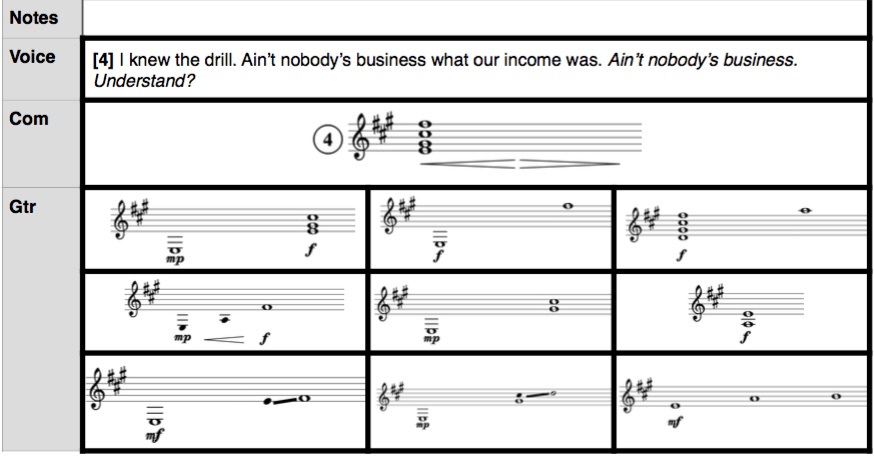
This is an intimate conversation between the guitar and the voice on being hungry and poor. The electronic part in the piece represents the hunger: it influences the person’s thoughts, emotions, and actions, however subtle or disruptive it is.
The piece was commissioned by The Oakland University Guitar Ensemble (Bret Hoag, director) as a part of the Bridging the Gaps: Guitars for Social Justice project.
PDF Score and necessary electronics part can be found at the following link
My PS Quartet No. 1 for electronic ensemble had an exciting debut season last year. In addition to multiple performances, the piece was featured in Score Follower. You can now watch the score of the piece while listening to the recording:
Compare this with the original video:
I also have received a grant to write and perform more piece for electronic ensembles from the Wayne State University’s Arts and Humanities Research Enhancement Program. The PS Quartet was used as an example of what the possibility of an electronic ensemble. With the grant, I will be purchasing 16 Dualshock controllers and write a piece for a large-scale electronic ensemble. More info soon!
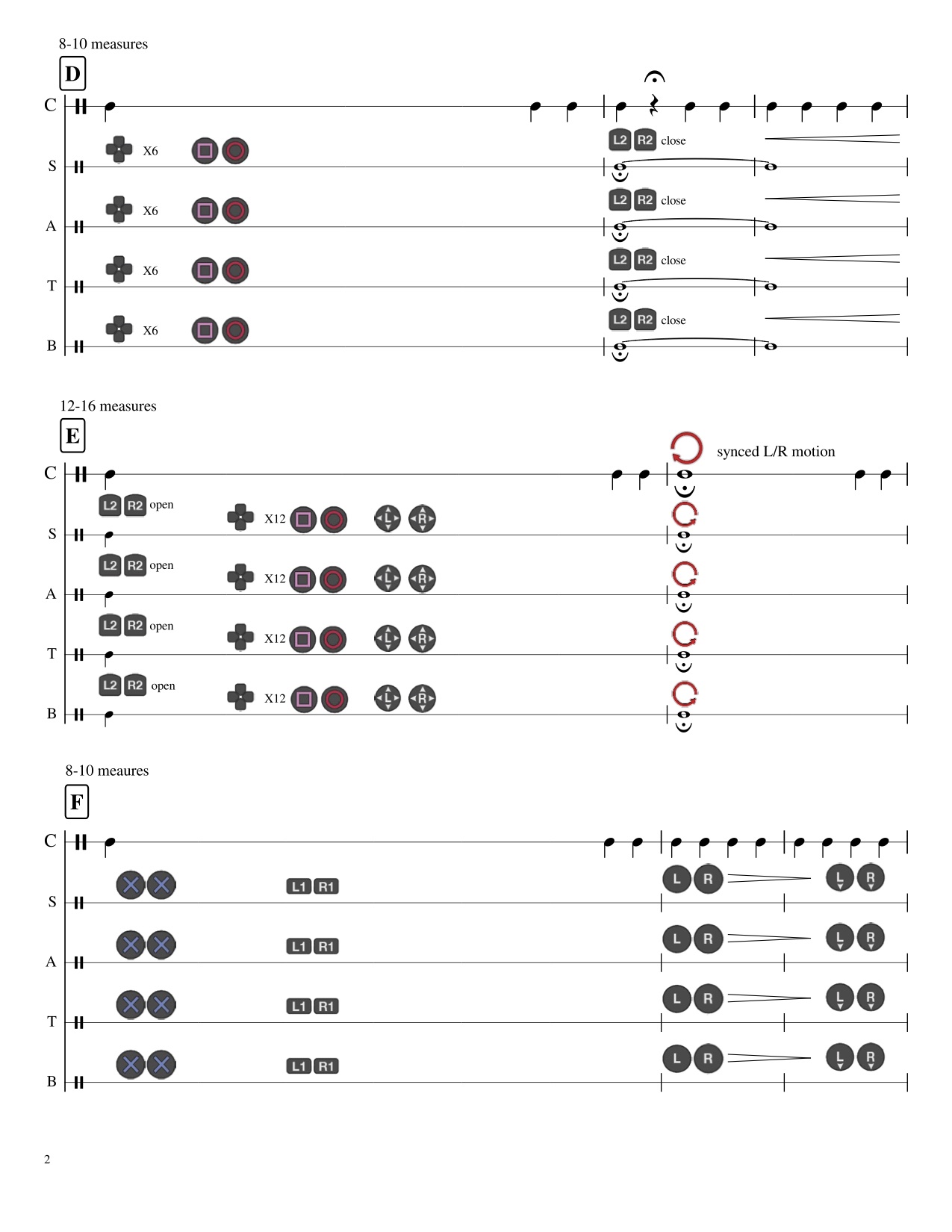
PS Quartet No.1 is a piece for Sony DualShock 4 Controllers and computer. All sound and graphics were created with SuperCollider. This piece is written for small to large laptop ensembles.
The piece was premiered and recorded by EMEWS (Electronic Music Ensemble of Wayne State). In the recording above, the piece was performed by the following members (from left to right)
Sean Monaghan
Laura Apolloni
James VanRysseghem
Joey McLennan
Charles Moore
This piece can be performed by anyone with a PlayStation controller and a computer. Instructions, scores, and necessary codes are available at the following link:
Turn on the controller before opening SuperCollider
Open SuperCollider
Each performer opens one of the files from PSQ1-Soprano, Alto, Tenor, or Bass according to his/her part and the connection (there are different files for USB and Bluetooth)
Go to Menu->Language->Evaluate File. The screen will become black and the patch is ready to start.
To quit or stop, press command+. (period) or anequivalent shortcut of Stop in Menu->Language