Category Archives: Compositions

Presets and Compositions

A preset is a parameter configuration of a digital electronic instrument. A preset can make one synthesizer sound like a drum, string, or anything else. It also makes one reverb unit imitate the acoustics of a stadium, bathroom, or any other environment. Compared to an analog instrument’s patch, a preset can be saved and loaded. I can accurately recreate and use favorite or project-specific sounds instantly in a digital modular synth.  And there could be thousands of presets for one instrument. The ability to access a large quantity of presets instantly and accurately is, in my opinion, the digital instruments’ most distinguishing advantage over analog or acoustic instruments.

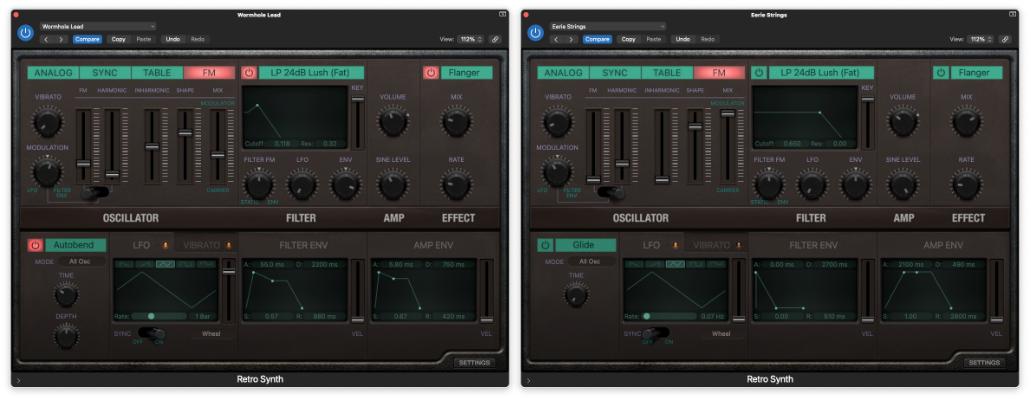
Many electronic music production starts with browsing through presets. A Logic Pro user can choose and play a sound, such as Eerie Strings or Wormhole Lead. These two sound different, but both are made with the same Retro Synth software instrument. In other words, Eerie Strings and Wormhole Lead are presets of Retro Synth. 

A producer could complete a piece with 100 different sounds using a  DAW, but that does not mean there were 100 different instruments. There could have been 10 instruments with 100 saved variations/presets.  Of those 100 presets, some could also be the creator’s original or modification. Some presets could change their parameters within a piece via automation. 

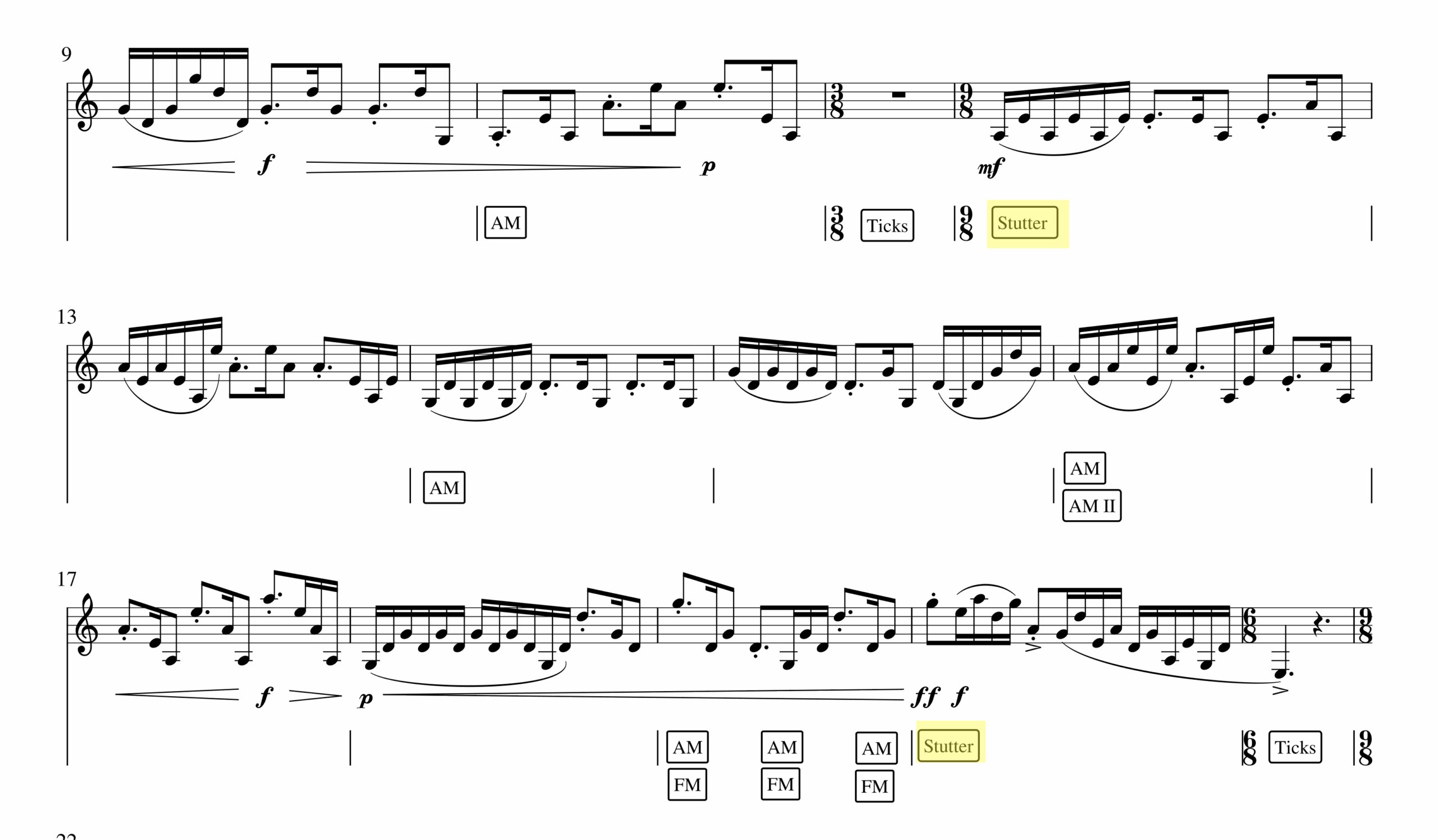
The idea of using multiple configurations of an instrument and then dynamically changing them applies beyond presets. Preset-changing is a uniquely electronic composition technique, as some electroacoustic compositions feature one or two electronic instruments with sequenced presets. For example, in  Armor+2 (2015), I cue digital instruments’ parameter changes according to the score.  I used SuperCollider to achieve this, but any apps with cue features could do the same.

In Armor+2, the computer randomizes parameters of a digital instrument where a boxed word is notated in the score (FM, AM, Stutter, Ticks). I think of this process as a random preset change that yields expected but different effects at every performance. For example, one can hear a stuttering effect in different rhythmic patterns in measures 12 (0:30 in the recording) and 20 (0:50 in the recording). The same randomization happens with FM and AM effects throughout the piece. The dynamically changing, yet well-timed change makes the computer part function like a jazz accompanist. A jazz pianist plays the notated chord progression but improvises how those chords are presented. Similarly, the computer part of Armor+2 changes the clarinetist’s sound as notated, but the resulting sounds are varied at every performance. 

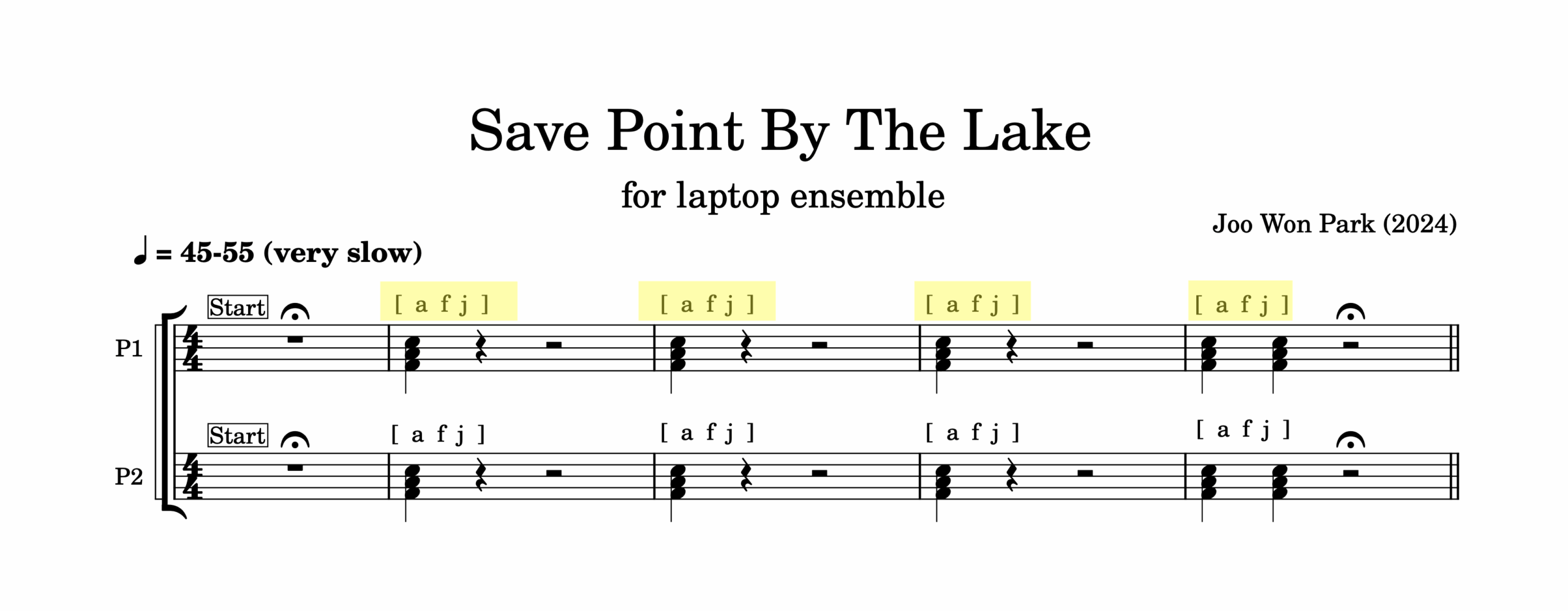
Another example is in Save Point By The Lake (2024) for a laptop ensemble. Every performer in this piece plays piano samples according to the score. For example, performers press keys A, F, and J on the computer keyboard in measures 2,3, and 4 with notated rhythm.

But unlike an acoustic piano, the laptop will not always play a F major chord. I designed the instrument so that at every stroke of a key, SuperCollider randomizes pitch, dynamics, and detuning amount. Pressing an F key at measure 1 and doing the same action in measure 2 yields a different note. This way,  the ensemble can play the piece in notated rhythm with computer-assisted interpretations.

A preset is a recordable and recollectable variation of a digital instrument. It is an equivalent of a save or a snapshot of an app, and it is a powerful tool to express originality and creativity. Anyone can use Logic Pro’s Retro Synth or SuperCollider, but a customized preset can sound unique. If those original sounds are put together in order or layered with other sounds, the result could be a composition. Lastly, if we expand the definition of an instrument, other creative processes could be thought of as a preset change. If a recording studio is an instrument, what are its presets? If an orchestra is an instrument, what are its preset changes and randomization? These wonderings are delightful and provocative.

This article is a part of Computer Music Practice – Learning.

Slump Recovery Project

I was unable to complete a single composition over the summer despite multiple attempts. Such unproductivity led to a chain of negative thoughts on the impact and relevance of my work and effort. I lost the will to create by July. The slump phase is not new for me or any creatives, but getting over it is never easy. To recover, I tried methods that worked in the past, but also did something new.

The usual remedy for a slump for me is working on related projects in small bites. My main project is music composition, and related projects are any other music activities. I focused on relearning and appreciating fundamental musicianship. 

  • I reread books that inspired me. When reading became tiring, I listened to audiobooks. 
  • I wrote blogs on the electronic music practice. It helped me to organize and reflect. 
  • I listened to all and any music. Summer is a great time to catch up on listening. I heard new things in old songs, and rediscovered time-tested techniques in new music. 
  • I practiced bass guitar, an instrument I wanted to play but did not have time to learn. You know, every other electroacoustic musician plays bass.

Engaging in musical activities kept me from completely letting go of being a musician. Unfortunately, this was not enough for me to get back to composing. I had to make a specific plan and task to get back to a creative routine.  

  • Write a 1-2-minute piece with the most familiar tool. In my case, it would be SuperCollider.
  • Start and finish a piece in one sitting. The goal is to remind myself of the joy and necessity of completing a piece.
  • Quality does not matter. Do not evaluate or self-critize the piece. 
  • Pieces do not have to have a new idea. An old idea presented in a different context is good enough.

This attempt worked, kind of. I finished a piece on July 22, but was not able to produce another piece until July 28. But from that day, I completed a 1-1.5-minute piece every day until July 31. It was a small win with an impact. Now, I am comfortable sitting on a computer for a few hours per day,  enduring the tedious or negative side of the creative process. 

As a record of this summer’s slump and post-slump, I share Slump Recovery Project, a 6-minute piece in 5 sections.

Lastly, here’s the log of my composition failures and successes in May-July 2025.

  • 5/19 Stopped working on a duet for plastic tube sqeakers and computer after two weeks. A simulation of the performance was disappointing, so I stopped.
  • 7/10 Attempted to write a new laptop ensemble piece. Again, a simulation of the performance sounded too much like a piece I wrote a few weeks ago.
  • 7/13 Jotted an idea for a no-input mixer duet. I thought writing for my favorite instrument would motivate me. It didn’t. I got more discouraged. 
  • 7/16-21 I could not do anything
  • 7/22 (check date): Made a 1.5-minute piece on SuperCollider titled I-IV-V-vi
  • 7/28 Made a 1.5-minute piece on SuperCollider and Logic Pro titled A Note of Happy
  • 7/29 Made a 1.5-minute piece on SuperCollider titled Decrescendo Revisited
  • 7/30 Made a 1-minute piece on SuperCollider and Logic Pro titled Riff
  • 7/31 Made a 50-second piece on SuperCollider and Logic Pro titled Elastic Drum

Sans Trou Ni Fin (2025)

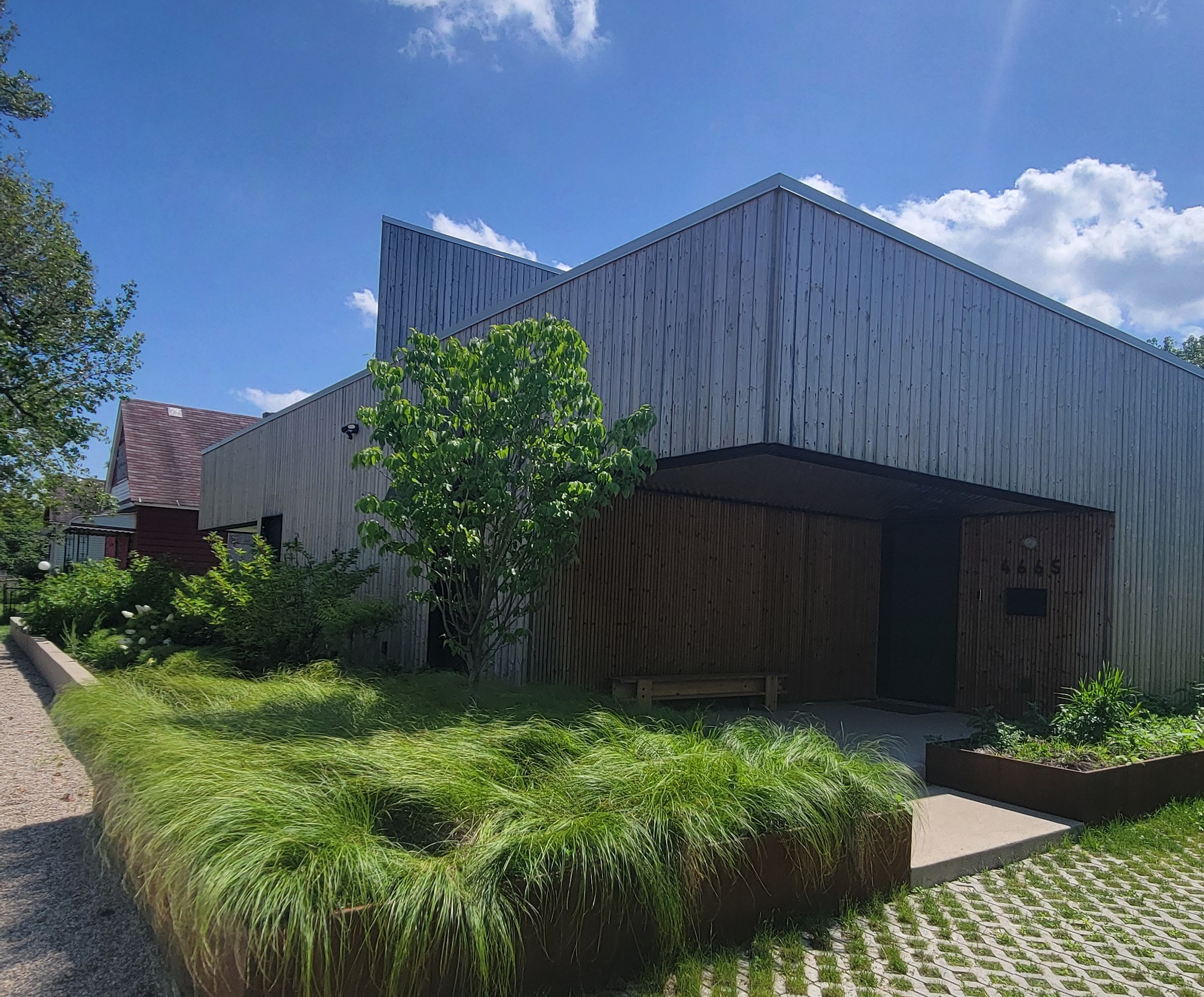
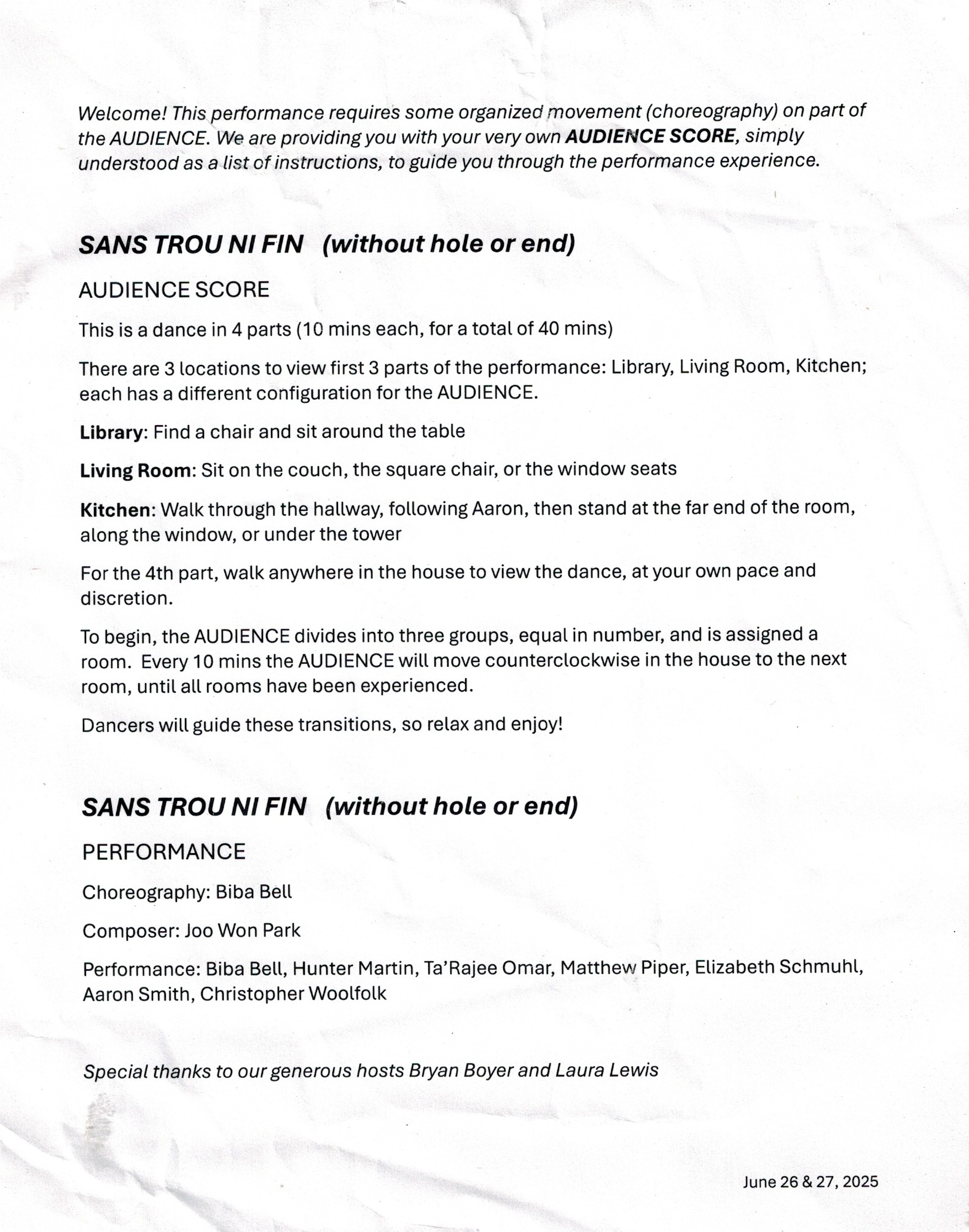
Sans Trou Ni Fin (without hole or end) is a collaborative work with Biba Bell. It was premiered on June 26th, 2025, as a site-specific movement piece. I made the music and designed the playback system. The show was about 45 minutes and had a total of four performances on June 26th and 27th, 2025.   

Form 

The show has six dancers, one reader, and a Detroit house with a remarkable design. Biba’s program notes below describe the experiences of audience members during the show. 

Sound Design and Composition

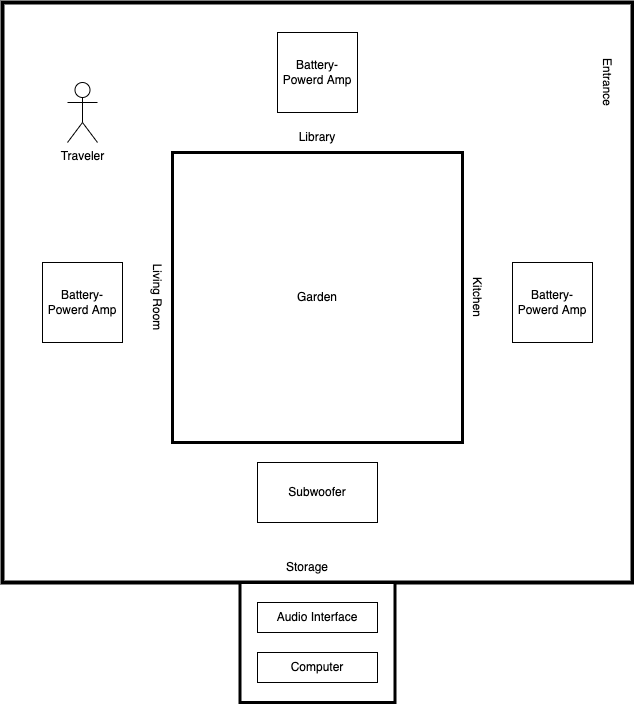
I visited the site a few months before the premiere, took notes and photos, and composed music. I made three different but correlated 10-minute pieces that will be played simultaneously on three sides of the center garden. I have also added a fourth sound that will be played back from a portable speaker. During the performance, a dancer walked with the portable speaker and visited the three sites. 

Below is a diagram showing a customized playback system for the show. It consists of three portable speakers, one subwoofer, a multi-channel audio interface, and a PC running Ableton Live. 

The tracks in the soundtrack album match the labels in the diagram.

The three places, the Library, Living Room, and Kitchen, each have their own music (tracks 3, 4, and 5), and Traveler intermittently visits them with a fourth sound (track 6, an abbreviated version of the original 30-minute file). The first track, named Sans Trou Ni Fin – Part I, is a simulation of all of the sounds playing together. Sans Trou Ni Fin – Part II is played at the last 10 minutes of the piece, where all dancers gather in the center garden. The windows to the garden are open for the last movement, allowing sound to travel with fewer obstructions. Part II also uses a subwoofer to add a low-frequency thump. During the shows, I was cueing the sound from a storage room, doors closed and hidden from the audience. 

The composition process consists of combining new and old techniques. SuperCollider codes used in End Credits, Save Point By The Lake, Tree Breezes, and Hold Drum became the starting points for the pieces. I edited the codes so that the resulting sounds are in the same key, tempo, and duration. For the ending, I added a slow version of Mellotron 7. During the rehearsal, the team wanted a 60-second-long transition sound to be played while the audience moved to another room. I quickly assembled the transition sound with a drone from Living Room. I did not upload the transition music.  

Remarks

Sans Trou Ni Fin was a second collaboration with Biba (info about the first collaboration is here). Biba brings out the beauty of the immobile space with the mobile human bodies. Her work has the best “here-and-now” experience a live performance can create.  And the performers, Hunter, Ta’Rajee, Matthew, Elizabeth, Aaron, and Chris, delivered it with 200%. I am grateful to work with the crew. 

Update 11/25/2025

One of the artists, Matthew Piper, wrote a beautiful article about the performance. Read about it here!

https://www.matthewjpiper.com/post/haunting-the-house-notes-on-dance-and-space

As for the documentation, the two performances are now available on Vimeo

Computer Music Practice – Composing

Composing, an act of making original music, is my main artistic skill. I make concrete and shareable products that represent personal thoughts and experiences. The product is sound, and the material I use is electronics. Since 2002, I have composed and shared over 130 compositions online and offline.  Electronic musicians can have various titles, such as a researcher, educator, developer, performer, etc.  The specialty I’ve focused on is that of a computer-based music composer. 

In CMP, I organized my compositions from 2014 to 2026 in two main categories and six subsections. The main categories are defined by the presence or absence of human performers. The first category, For Computers, has fixed media and algorithmically generated music. They do not require human performers to make sound. They are either listened to as is (without images) or are used in multidisciplinary shows. The pieces in this category are further grouped by albums (Overundertone, DotZip, and Forms to Ponder) or functions (Sound Installation or Dance).

The second category, For Humans, involves pieces for human performers. Unlike the For Computers pieces, they are best experienced in live concerts. The For Humans category is further organized by instrumentation. The Solo Performance section has works written for me to play on stage. Most of them are improvisational and were written to show my performance skills. The music under Instrument and Computer needs performers other than myself. They are written for one or two classically trained instrumentalists and a computer-generated part. The last subcategory, Electronic Ensemble, differs from the others, as they are written for an ensemble of electronic instrument performers. The performers are not necessarily traditionally trained musicians. The number of performers ranges from 4 to 20 or more.

Some compositions were successful in leading me to new or better opportunities. Some pieces did not make it beyond a premiere.  But all compositions led to improvements in technique, time and energy management, human interactions, and getting inspirations.

  • Technique: Writing and editing SuperCollider codes for more than 100 pieces gave me plenty of time to get good at expressing musical ideas in numbers and instructions. The repetition and refinement in composition also form a musical style. I think there is a “Joo Won sound” at this point.
  • Time and Energy Management: With improved technique, I spend a fraction of the time and energy to create music of equal quality compared to decades ago.  The extra time and energy leave room to experiment and explore. 
  • Human Interactions: Working with others is not my natural talent, but it has gotten easier as I write and present more pieces for performers. Meeting, interacting, listening, arguing, and all other activities need practice. Writing and sharing compositions gave me plenty of time for trial and error. 
  • Getting Inspirations: noticing things worth sharing and writing music about them needs practice. Art is about sharing unusual or memorable experiences in life, and artists actively search for them. I learned to notice and observe delightful sounds, experiences, and memories so I can compose. Perhaps more importantly, I also learned to make music when the inspiration is nonexistent. A deadline is the best inspiration. 

Please click on the objects in the CMP diagram to listen and read about the works featuring unique electronic sounds. Most articles also have links to the SuperCollider code for readers to see and run. The purpose of the articles in the Composing section of CMP is to share composing techniques and tips with specific examples from one composer’s work catalog. Compare how I thought, wrote, and executed pieces with other electroacoustic composers. If willing, compare how the pieces in the Composing section are similar or different by album, instrumentation, or functions.


Computer Music Practice (CMP) is an interactive and personal example of computer musicianship. Click each entry in the chart to read and listen to Joo Won Park’s computer music research.

Overundertone (2015)

All compositions contain aspects of the creator’s thoughts and life at a particular time.  Overundertone, a 2015 album consisting of eight electroacoustic tracks, is a reflection of me a decade ago.  Listening to the album feels like reading an old diary.  The me in 2015 is unfamiliar to the me in 2025 – he is passionate and curious about the world and people. He had the thoughts and emotions I wish to have now. Below are what I learn about myself when I listened to the tracks.

  • Eyelid Spasm: I liked high frequencies, so I made a piece using them. I played with my (then) 5-year-old and 1-year-old sons, all the time, so the playfulness is in the piece. I even used a picture of me mimicking an animal (I think, I hope) for the kids as a cover photo. I don’t think I can hear many frequencies featured in this piece anymore.
  • Cross Rhythms: I wrote it as a class project example. I asked Oberlin’s TIMARA students to pick a page in Tom Johnson’s Imaginary Music and make an electroacoustic piece about it.  I chose Cross Rhythms and composed a scene where two different rhythms overlap. The teacher-composer identity is in the piece. 
  • Three Corn Punch: It’s a recording of a live performance. It is probably my last piece that does not involve electronic sound. It uses a Disklavier, though.  There are no new techniques here. I learned to accept that I don’t have to develop a new concept for every composition. A good idea from others and myself needs repetition, reinterpretation, and refinement.
  • Cornfields and Cicadas: This is one of the soundscape works using original field recordings and synthesized sounds. I have been creating a series using this instrumentation since my graduate student years. I remember writing it with less struggle and stress, but the quality was about the same. It is a sonic diary of a vacation to a farm in Pennsylvania, where I went with my family and friends. 
  • Beft: I wrote it because I was a dad reading Dr. Seuss to the kids. Beft is a creature in Things You Can Think that only moves to the left. It contains sounds and techniques I loved then – Shepard tone, 8-channel spatialization, overtones, etc. It was also a part of a class project example, like Cross Rhythms. My teacher-composer-dad is all represented in Beft. 
  • Snake and Ox: It is a recording of an improvisation using instruments I used in solo shows. They are a no-input mixer, SuperCollider, and a custom synth. The no-input mixer sound was the most exciting thing to me. I remember dancing along with the no-input mixer noises while practicing. 
  • 10M to Fairmount: It is a sonic diary of a park in Philadelphia, where I lived for six years. Philly feels like a hometown since I started my family there. I must have been interested in visuals in addition to field recordings and synthesizers then. The piece has a video version. Like Cornfields and Cicadas, it is a diary-like piece.  
  • Sky Blue Waves: It’s a piece from 100 Strange Sounds, a project I thought would be my magnum opus. The track has a simple instrumentation (celesta and a field recording of a beach), but has the not-so-happy aspects of my life at that time. As a contrast to Eyelid Spasm, it worked well as a closing piece of the album.

These songs are forgotten, but are still significant to me. Overundertone is an archive of emotions, efforts, and life in audio, the format I love the most. The album reminds me to strive (용써라) like 2015. The jaded, slumped me of 2025 needs that. 

jwp in 2015