
I performed Page Turner’s Agony at SEAMUS 2022. I customized and updated the original SuperCollider so I can perform without looking at a computer screen. The performance was archived by Deck10 Media.
Tag Archives: composition
Notes and Comments : Remix EP
I write notes and comments in books, journals, and PDFs. Underlines and scribbles of my thoughts do not change the work, but they help me remember what I liked most about the work and the artist. The four tracks in this album are the sonic equivalent of notes and comments. I highlighted the most memorable characteristics while trying my best to preserve the intent of the original piece. The last track is not a remix, but it is my way to document a few good things about the summer of 2020.
The original tracks are
Alex Koi, Last Goodbye (2020)
alexkoi.bandcamp.com/track/last-goodbye
Michael Malis, Imperfect Intervals IX – Gently, Freely (2021)
michaelmalis.bandcamp.com/track/imperfect-intervals-ix-gently-freely
Molly Jones, Solar Wind (2020)
mollyjones.bandcamp.com/track/solar-wind
Jienan Yuan, Invisible Embrace (2021)
youtu.be/7sU4ilzXnmg
* All tracks were used with the permission of the composers/publishers. Profits made from the sale will be distributed to the remixed artists.
* Overall mix of the EP is relatively low and uncompressed for quiet listening.
credits
released February 2, 2022
Molly Jones, Alex Koi, Michael Malis, & Jienan Yuan, composers
Joo Won Park, composer & remixer
Sum and Difference (2021)
Sum and Difference is a collaborative composition guideline for music technologists. Each member of the ensemble joins in an online meeting platform to process audio files according to the score. The result is new sample-based compositions that share similar characteristics. The pieces are also different due to the variety of the original samples and the ensemble member’s improvised parameter changes.
For participants, Sum and Difference is more about the process of making it than the result. In the pandemic-influenced time, the joy of creating music together, the joy of creating something from nothing in an ensemble, is severely limited. But the current situation forces music technologists to experiment with collaborative methods best suited for online interaction. Sum and Difference works best when each member is on the Internet, physically alienated from the rest of the world.
by Joo Won Park
Performers
Number of performers: 4-10
Needed technology
- A web folder accessible by all performers
- An audio editor or DAW for each performer
Needed skills
- Experience and knowledge in digital audio editing and processing
- Data organization and management skills
Preparation
- Make a sharable web folder
- Upload recordings of non-musical sound with the file names shown in the score (A0.wav, B0.wav, etc.)
- The number of uploaded audio files should equal the number of performers
- Each audio file should be 2-5 seconds long
- Each audio file should be distinct from the others
- Each performer should plan a processing or editing technique to change an audio file
- Use any DAWs or apps
- Establish a short and repeatable process. The performer should be able to execute it within 5-10 minutes
Execution
Step 0. Gather using a remote meeting platform such as Zoom or Google Meet. Assign one performer to one Processor.
Step 1. Download, process, and upload the audio file from the web folder according to the score.
Each cell in the score has ▼FileName-P-▲FileName. Here’s an example of how to interpret it
If the cell has ▼A0-P-▲B1
- Download file named A0.wav from the web folder
- Process the sound according to the plan
- Export the sound with file name B1.wav, and upload it to the web folder
Step 2-10. After 10 minutes, repeat the download-process-upload procedure described in Step 1.
- Vary the processing parameters (i.e., move knobs, use different settings)
- Strive to add a few more seconds of sounds
- Edit and polish the sound if possible (i.e., delete the silence at the beginning, normalize, etc.)
- Be consistent with the file format. Use a format readable by all platforms, such as .wav and .aif
Last Step. Share and listen to the resulting sounds. The number of final tracks should equal the number of performers.
Score by Ensemble Size
| Quartet | Step 0 | Step 1 | Step 2 | Step 3 | Step 4 |
| Processor 1 | A0 | ▼A0-P-▲B1 | ▼A1-P-▲B2 | ▼A2-P-▲B3 | ▼A3-P-▲B4 |
| Processor 2 | B0 | ▼B0-P-▲C1 | ▼B1-P-▲C2 | ▼B2-P-▲C3 | ▼B3-P-▲C4 |
| Processor 3 | C0 | ▼C0-P-▲D1 | ▼C1-P-▲D2 | ▼C2-P-▲D3 | ▼C3-P-▲D4 |
| Processor 4 | D0 | ▼D0-P-▲A1 | ▼D1-P-▲A2 | ▼D2-P-▲A3 | ▼D3-P-▲A4 |
| Quintet | Step 0 | Step 1 | Step 2 | Step 3 | Step 4 | Step 5 |
| Processor 1 | A0 | ▼A0-P-▲B1 | ▼A1-P-▲B2 | ▼A2-P-▲B3 | ▼A3-P-▲B4 | ▼A4-P-▲B5 |
| Processor 2 | B0 | ▼B0-P-▲C1 | ▼B1-P-▲C2 | ▼B2-P-▲C3 | ▼B3-P-▲C4 | ▼B4-P-▲C5 |
| Processor 3 | C0 | ▼C0-P-▲D1 | ▼C1-P-▲D2 | ▼C2-P-▲D3 | ▼C3-P-▲D4 | ▼C4-P-▲D5 |
| Processor 4 | D0 | ▼D0-P-▲E1 | ▼D1-P-▲E2 | ▼D2-P-▲E3 | ▼D3-P-▲E4 | ▼D4-P-▲E5 |
| Processor 5 | E0 | ▼E0-P-▲A1 | ▼E1-P-▲A2 | ▼E2-P-▲A3 | ▼E3-P-▲A4 | ▼E4-P-▲A5 |
Score for larger ensembles are available in the Google Doc Version
Demo/Example
Link to all files made in a 10-piece ensemble version
Made by Electronic Music Ensemble of Wayne State (EMEWS) on Jan 20, 2021
Matthew Banka, Maxwel Bourgeois, Garrison Briggs, Daniel Kozlowski, Logan Macka, Benjamin Schornack, Alec Segel, Mark Whalen, Daniel Yates, Michael Younger
Compare and listen to the process
J0, A1, B2, C3, D4, E5, F6, G7, H8, I9, J10 (one sample going through ten processes)
Piano Triplets – Park & Starkey

My friend and musical role model Starkey released a collaborative album. In technical terms, it is a project extended from ISJS. In aesthetical terms, the project is about restraints and forms. Personally, and most importantly, it is two friends saying ‘hey!’ to each other.
Starkey joins friend and composer Joo Won Park for an EP entitled “Piano Triplets” on NOREMIXES. The release showcases Joo Won Park’s unique supercollider processing over Starkey’s production samples. Three unique pieces, each consisting of only three samples: hardware and software synthesis meets piano in these short bursts of experimentation.
Bandcamp album description
Computer Music Practice Examples
Computer Music Practice Examples is a new series featuring the application of computer music technology to instrument design, composition, performance, and presentation.
Introduction
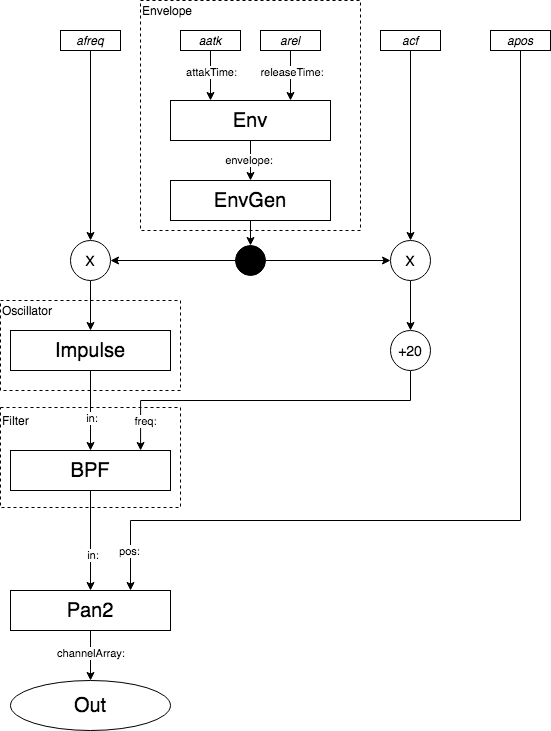
RMHS: Drone Generator
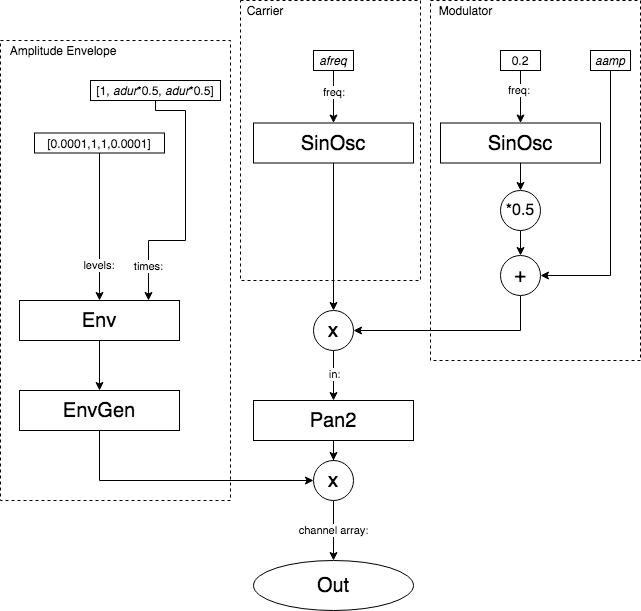
ISJS: Granular Processor
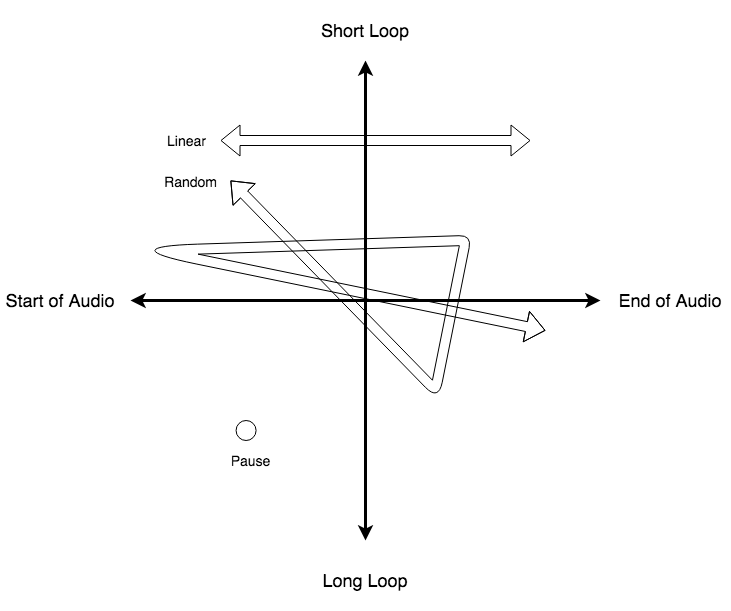
SIOE: Audio Supercut Generator
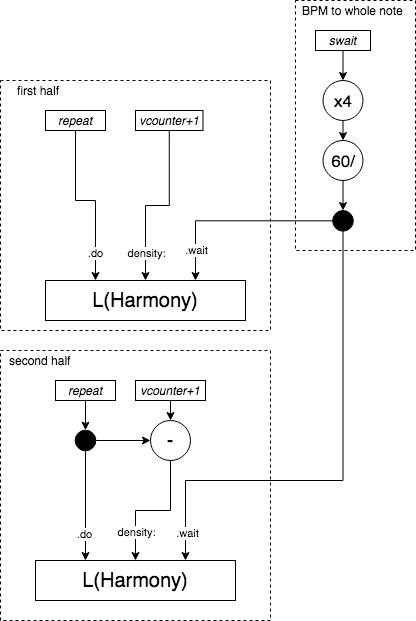
APG: Audio Palindrome Generator
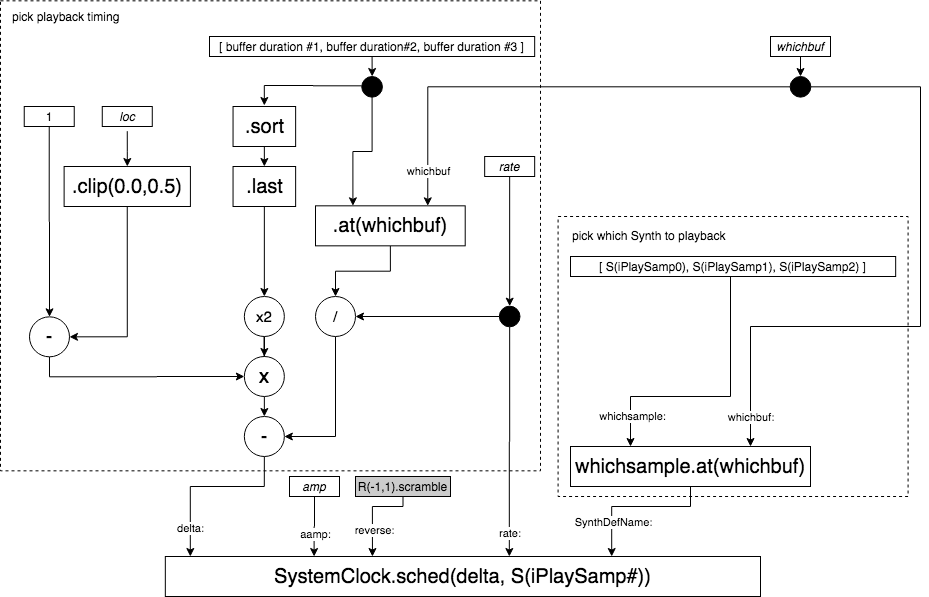
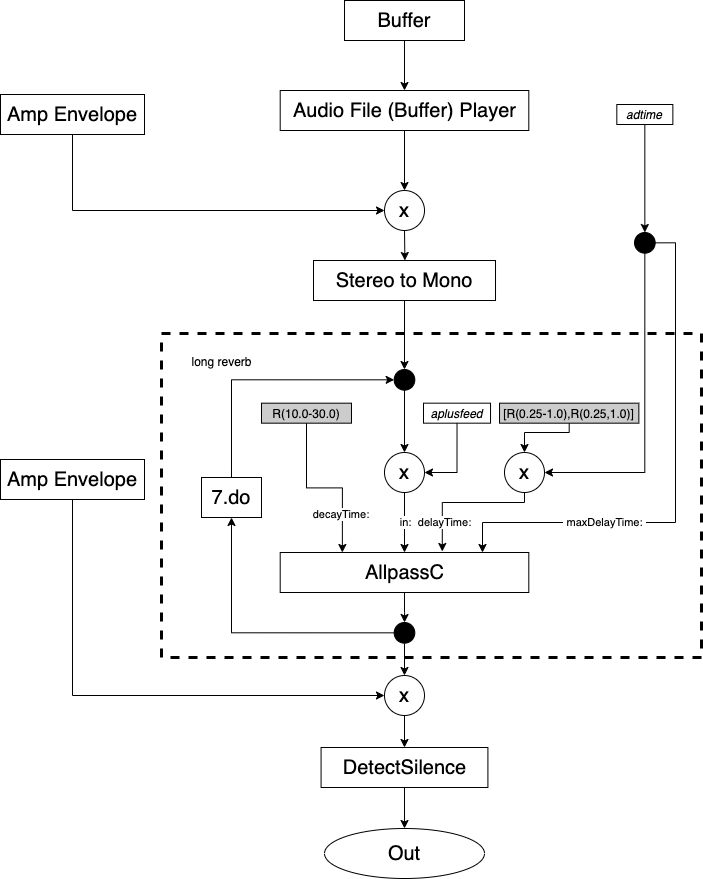
Many: Reverb Ambient Generator
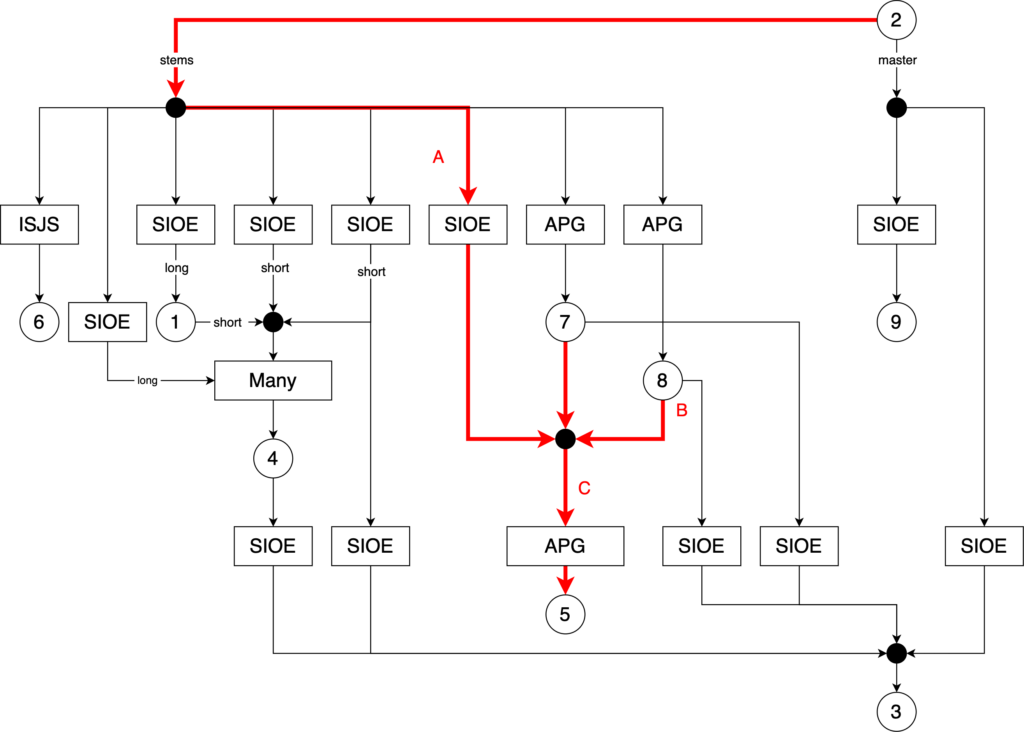
Forms to Ponder
CMPE Variety Pack
- All-in-One App ( for Mac OSX)
- All-inOne SuperCollider Patch (for PC and Mac)
- Demo Video