I have been running electronic ensemble workshops at recent festivals, concerts, and summer camps. At the workshop, participants from any musical background and level gather to make music together with sound-making devices, such as phones, computers, synthesizers, drum machines, and mixing consoles. I find that such a workshop is an effective activity to introduce the genre to audiences and colleagues. It provides benefits that concerts and recordings cannot.
First, an active participation in electronic music-making adds visual and tactile reference to the electronic sounds. People who have played a drum machine will have a better understanding of its sounds and operations than those who have only heard the sounds. They can imagine and admire the intriguing rhythmic patterns that artists create on stage. Active engagement in music-making adds an extra layer of context, appreciation, and understanding.
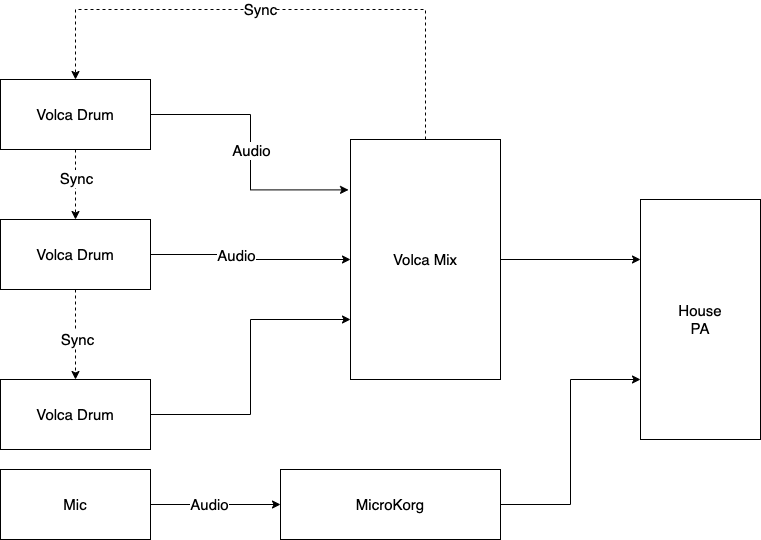
Learning becomes a part of entertainment when it occurs at concerts. The linked video of a drum machine trio was shot at Tec-Troit 2025. I set up three synced drum machines and one synthesizer for the festival attendants to play. When a person showed interest, I taught them basic operations of Volca Beats or MicroKORG. Many participants played electronic instruments for the first time. Most stayed more than 15 minutes performing music with friends and strangers.
The accessible ensemble experience, such as one described above, is another benefit of electronic ensemble workshops. Playing music together is an irreplaceable human-to-human experience. Bands and orchestras provide such moments, but it often takes years of individual and group practice to be at a presentable level. Technology can shorten the time it takes to produce good sounds together, allowing participants more time to experience the ensembleness—a special and personal connection only possible when people create music together. It’s like singing our lungs out together at late-night karaoke, but with synthesizers.
In the drum machine ensemble video, the performers do not need to worry about keeping the tempo, as all drum machines were synced. It eliminated the need to learn to play music in tempo, allowing participants more time to explore patterns and their combinations. In May 2025, I did a laptop ensemble workshop with a group of volunteers in Saginaw, MI. I taught Singaporean Crosswalk and Save Point By the Lake to local musicians, fans, and students of all ages. The group rehearsed two pieces in 1.5 hours and performed in a concert following the workshop. The participants did not need to learn to play scales or articulations. They had to rehearse some choreography and timings to press keys on the laptops during a short rehearsal. And then enjoy the sound while rehearsing and presenting.
In addition to drum machines, synthesizers, and laptops, I have conducted electronic workshops featuring ensemble performances. In no-input mixer workshops, I teach students the basics of no-input mixing patching. There are often fewer mixers than the participants, so I ask students to team up. The workshop participants then proceed to perform Benjamin Damann’s The King of Nothing as a group. In a similar spirit, my workshop recently has included Piyawat Louilarpprasert’s Shrimp Raptors in the repertoire, in hopes of introducing DIY instruments and multimedia to the audience.
The effect of running electronic ensemble workshops has been quite positive so far. I get energized sharing what I love about live electronic music. Participants of the workshop remember my music and concert as more than a sound – it is a great promotional activity. Hopefully, they would try performing as an electronic ensemble after the workshop. If readers are interested in running or attending a workshop, please do not hesitate to contact me. My workshops require some planning, but they are portable and require minimal equipment from the hosts.
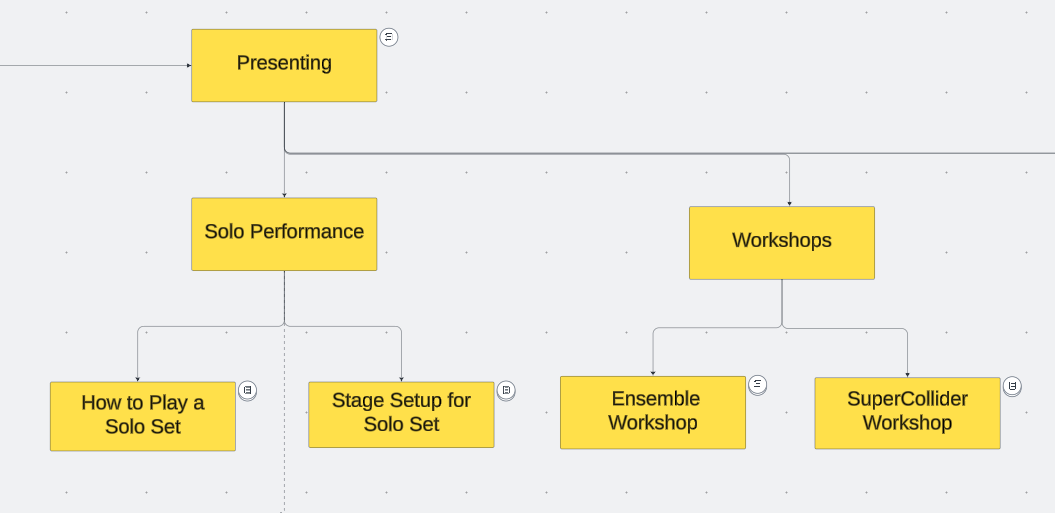
This article is a part of Computer Music Practice – Presenting.