
Composing, an act of making original music, is my main artistic skill. I make concrete and shareable products that represent personal thoughts and experiences. The product is sound, and the material I use is electronics. Since 2002, I have composed and shared over 130 compositions online and offline. Electronic musicians can have various titles, such as a researcher, educator, developer, performer, etc. The specialty I’ve focused on is that of a computer-based music composer.
In CMP, I organized my compositions from 2014 to 2026 in two main categories and six subsections. The main categories are defined by the presence or absence of human performers. The first category, For Computers, has fixed media and algorithmically generated music. They do not require human performers to make sound. They are either listened to as is (without images) or are used in multidisciplinary shows. The pieces in this category are further grouped by albums (Overundertone, DotZip, and Forms to Ponder) or functions (Sound Installation or Dance).
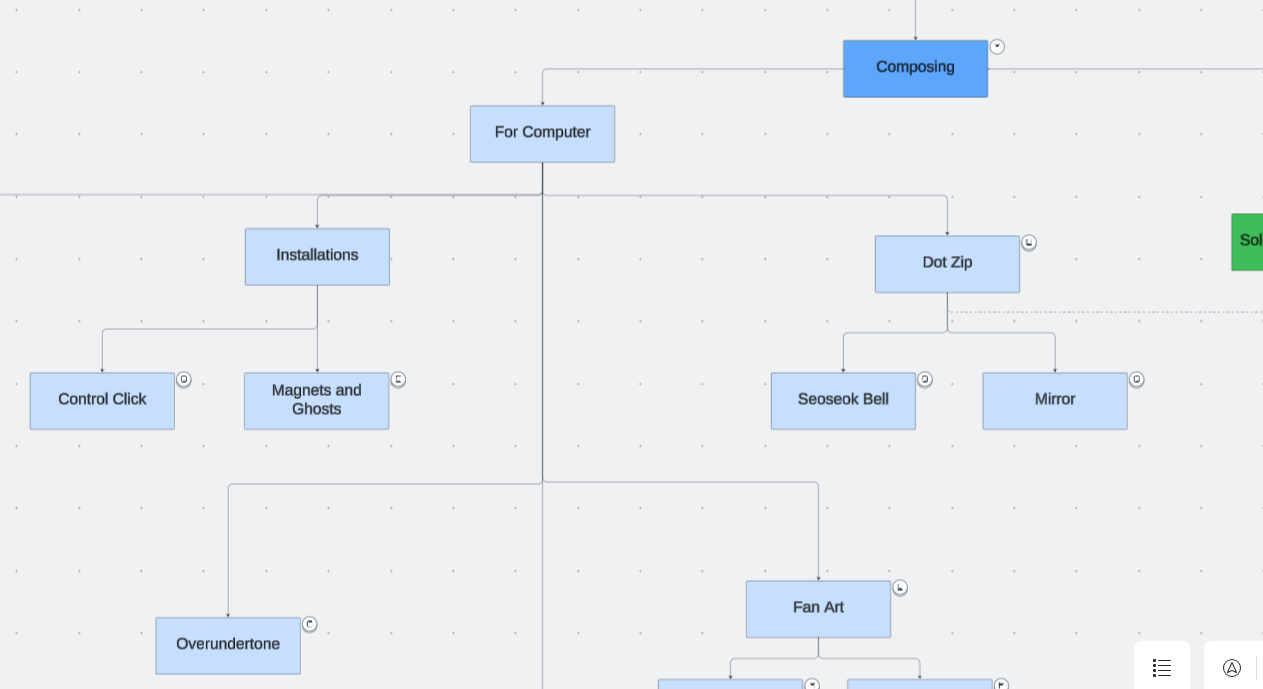
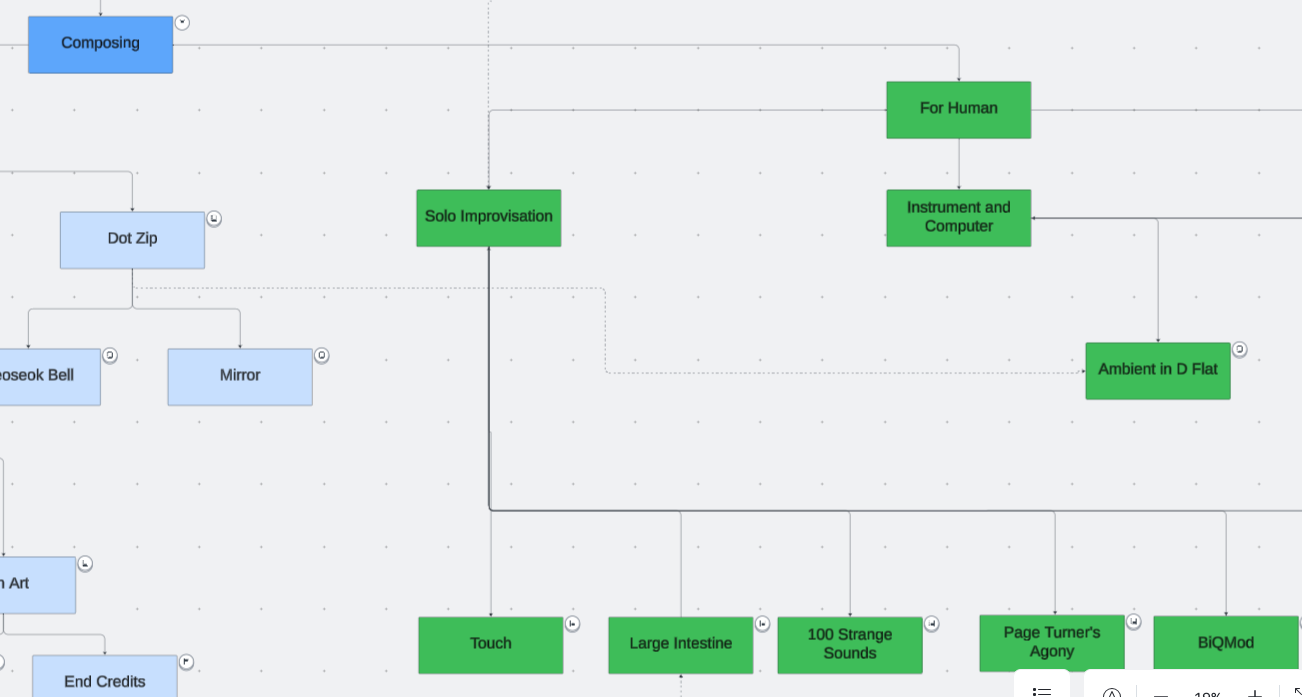
The second category, For Humans, involves pieces for human performers. Unlike the For Computers pieces, they are best experienced in live concerts. The For Humans category is further organized by instrumentation. The Solo Performance section has works written for me to play on stage. Most of them are improvisational and were written to show my performance skills. The music under Instrument and Computer needs performers other than myself. They are written for one or two classically trained instrumentalists and a computer-generated part. The last subcategory, Electronic Ensemble, differs from the others, as they are written for an ensemble of electronic instrument performers. The performers are not necessarily traditionally trained musicians. The number of performers ranges from 4 to 20 or more.
Some compositions were successful in leading me to new or better opportunities. Some pieces did not make it beyond a premiere. But all compositions led to improvements in technique, time and energy management, human interactions, and getting inspirations.
- Technique: Writing and editing SuperCollider codes for more than 100 pieces gave me plenty of time to get good at expressing musical ideas in numbers and instructions. The repetition and refinement in composition also form a musical style. I think there is a “Joo Won sound” at this point.
- Time and Energy Management: With improved technique, I spend a fraction of the time and energy to create music of equal quality compared to decades ago. The extra time and energy leave room to experiment and explore.
- Human Interactions: Working with others is not my natural talent, but it has gotten easier as I write and present more pieces for performers. Meeting, interacting, listening, arguing, and all other activities need practice. Writing and sharing compositions gave me plenty of time for trial and error.
- Getting Inspirations: noticing things worth sharing and writing music about them needs practice. Art is about sharing unusual or memorable experiences in life, and artists actively search for them. I learned to notice and observe delightful sounds, experiences, and memories so I can compose. Perhaps more importantly, I also learned to make music when the inspiration is nonexistent. A deadline is the best inspiration.
Please click on the objects in the CMP diagram to listen and read about the works featuring unique electronic sounds. Most articles also have links to the SuperCollider code for readers to see and run. The purpose of the articles in the Composing section of CMP is to share composing techniques and tips with specific examples from one composer’s work catalog. Compare how I thought, wrote, and executed pieces with other electroacoustic composers. If willing, compare how the pieces in the Composing section are similar or different by album, instrumentation, or functions.
Computer Music Practice (CMP) is an interactive and personal example of computer musicianship. Click each entry in the chart to read and listen to Joo Won Park’s computer music research.