
Create a patch, make different sounds with it, and arrange them in order. This is my go-to method for computer music composition. Instead of a theme in the theme and variations form, a computer musician begins a composition by making an electronic instrument or an audio app patch. Then, the composer explores different sonic possibilities of the instrument. The sounds created with the instrument are then presented in a particular order. The article demonstrates this process with my old composition. I will also provide more recent practices of the method with the entries in Computer Music Practice.
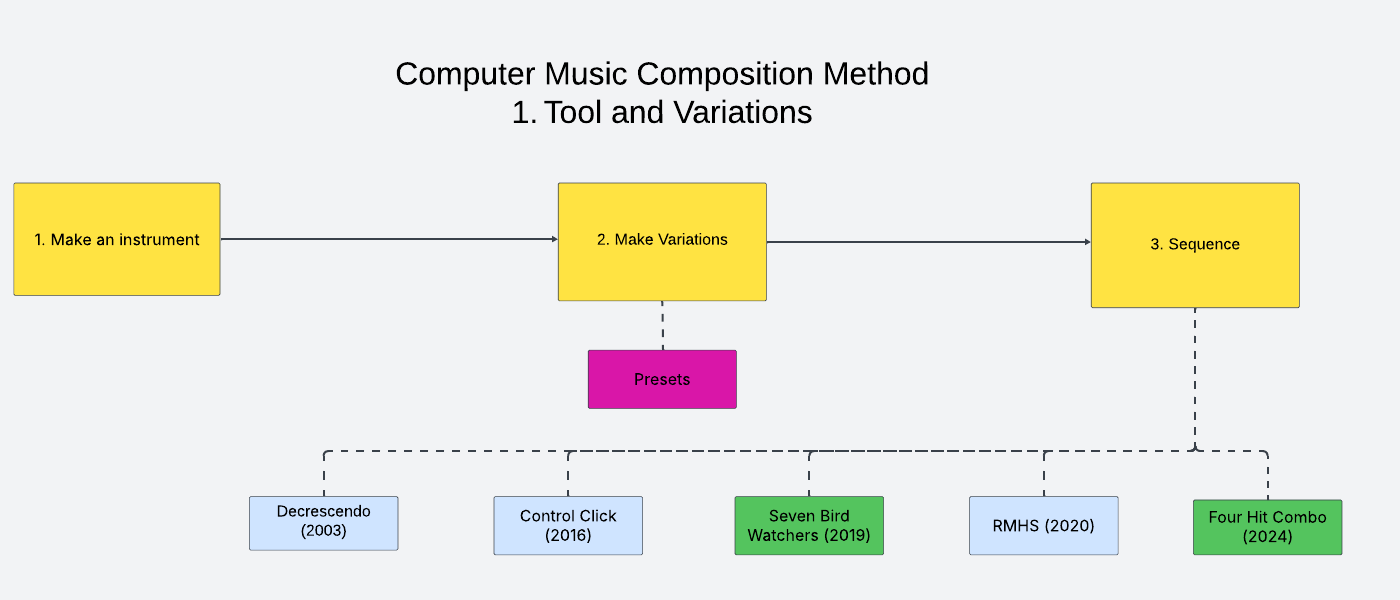
Tool and Variations in Decrescendo (2003)
Step 1. Make a software instrument
A computer music composer’s first job often is to design a digital instrument or a patch. A patch in this context is a specific connection of features/modules in an audio programming environment, such as Max, Csound, or SuperCollider. In Decrescendo, a fixed-media piece published in 2003, I wrote a Csound patch that generates a series of sine tones according to an adjustable overtone series. The formula to make a pitch series is as simple as the one below, but I could control tempo, note duration, and pan to my taste.
Note of a scale = fundamental frequency* (overtone number *detune value)Here are two sound examples generated from the Decrescendo instrument.
Step 2. Make variations with the instrument
A customized instrument has the potential to generate sounds of various timbres with different, sometimes randomized, settings of its parameters. The second step in the tools and variations method is to experiment and document as many different parameter settings as possible that yield distinct sounds. In Decrescendo, I adjusted the fundamental frequency, note duration, scale direction, pan position, and detune value to create different, but related, sounds. Some variations are created with duplication and overlap (more on this in another article). Below are some audio examples.
Documented variations of parameter settings in a digital instrument are called presets. Featuring presets of an instrument is a distinct characteristic of electronic music compositions. Here’s an article about presets for further study.
Step 3. Sequence the variations
The next step after gathering a library of presets is to make decisions on when to play which sounds. The decision-making and its documentation involve selecting a few from many sounds in Step 2. The deciding factor depends on the context and personal taste. In the case of Decrescendo, the piece opens with an unaltered overtone series, followed by slightly detuned scales. The second section (00:30) contrasts the opening by presenting a few descending overtone series. The third section (00:50) reminds the listener of the opening gesture with a further exploration of detuning and tempo variation. The preset choices for the rest of the piece are my answers to the question, “What makes sense based on what we have heard so far?”
The sequencing, an act of ordering events, of various sounds made with an instrument, is not formulaic. There is no right answer, but the choices are based on the context, experience, and taste of the creator.
Computer Music Practice
Tool and variation is a method that could be applied to many digital music formats. Here are my recent applications of the method in installation, fixed media, and electronic ensemble works. The entries are part of the Computer Music Practice project.
Control Click (2016): In this installation for multiple desktops, every computer plays the same SuperCollider patch. The instrument is designed to generate a randomized rhythm and timbre at a pre-scored and fixed timing. In other words, the instrument randomly generates timbre at a fixed sequence of changes. I saved a surprising and best preset setting I found for the climax.
Seven Bird Watchers (2019): In this electronic ensemble piece, I did not design the instrument, but made a specific drum pattern for Korg Volca Beats. The score displays seven variations of button combinations and gestures that performers need to create with the said drum pattern at a specific timing. The variable tempo is composed/sequenced with SuperCollider.
RMHS (2020): RMHS is a drone generator made with SuperCollider. A user can download the patch, set parameters, press a button, and create a drone of microtonal harmonies. The RMHS album consists of eight examples of such drones. The sequence portion of this project is the track order, which reflects my interpretation of consonant and dissonant harmonies.
Four Hit Combo (2024): The preset variation and sequence creation process is similar to that of Seven Bird Watchers – I notated different instances of presets for performers to interpret. But the instrument in Four Hit Combo does not have a set sound. Instead, it is a platform that processes any incoming audio files with a set of gestures based on granular synthesis. It is possible to create an instrument without sound in computer music!